
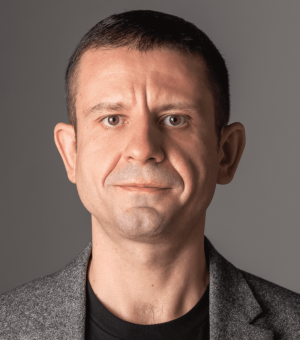
DMAT, a deep-tech innovator spun out of the Massachusetts Institute of Technology (MIT), has raised $4.5 million to fast-track the commercialisation of its self-healing, sustainable concrete technology. The funding round, led by Primo Capital SGR S.p.A., via its Primo Climate fund, marks a major step in bringing to market a solution that could redefine durability and carbon performance in the construction sector.
The round attracted a diverse group of international investors, including Safar Partners, PeopleFund, Deep Future, Corbites, and other global backers focused on climate innovation and materials science. This collective interest underscores growing confidence in the role of advanced materials and low-carbon concrete technologies in tackling the construction industry’s decarbonisation challenge.
Transforming the world’s most used construction material
Concrete is the backbone of modern infrastructure, used in everything from roads and bridges to skyscrapers and housing. The global concrete market is valued at over $1 trillion annually, representing around 1% of global GDP. Each year, more than 4.3 million buildings are constructed, consuming over 33 billion tonnes of concrete, a figure projected to rise by 30% by 2050 as urbanisation accelerates.
However, despite its ubiquity, concrete remains a major environmental concern. It is responsible for roughly 8% of global CO₂ emissions, largely due to the energy-intensive process of cement production, which alone accounts for about 90% of the sector’s emissions. On top of this, corrosion and cracking in reinforced concrete generate an estimated $100 billion in annual repair costs worldwide, highlighting an urgent need for more durable, sustainable materials.
This is where DMAT’s self-healing concrete enters the picture.
A self-healing solution for a carbon-intensive industry
DMAT’s innovation lies in its ability to double the lifespan of concrete and mortar through a unique self-healing mechanism that addresses two of the most common causes of structural degradation: crack formation and carbonation. By enabling the material to autonomously repair micro-cracks and resist carbonation over time, DMAT’s technology extends service life, significantly cuts maintenance costs, and reduces the need for energy-intensive reconstruction.
Equally critical is its environmental impact. By reducing cement content and extending durability, DMAT’s formulation can lower CO₂ emissions by up to 60% compared with conventional concrete. This aligns directly with the global push toward net-zero construction materials and more sustainable infrastructure development.
“Following an intensive R&D journey, DMAT is proud to be present in the Italian and Swiss markets with a breakthrough technology that delivers an unmatched mix of durability, sustainability, and performance,” said Paolo Sabatini, CEO and Co-Founder of DMAT. “The trust of world-class investors will enable us to build strategic partnerships across the industry and activate our production in the United States.”


Backed by strategic climate investors
Leading the round, Primo Capital, Italy’s premier independent platform for alternative investments, sees DMAT’s concrete as a pivotal enabler for low-carbon infrastructure. The investment through its Primo Climate fund supports scalable technologies that mitigate environmental impact across strategic industries.
“Safar Partners is excited to support DMAT and its innovative technology, which will help to reshape one of the world’s strategic industries – construction,” said Arunas Chesonis, Managing Partner at Safar Partners. “DMAT’s approach, combining sustainability with superior economic performance, will be critical to driving the global transformation of hard industries.”
DMAT’s roster of investors reads like a who’s who of forward-thinking capital in climate tech and deep materials science. Deep Future, founded by technologist Pablos Holman, and Corbites, a European venture capital fund dedicated to climate innovation, both see enormous potential in technologies that enable longevity and lower embodied carbon in infrastructure.
From MIT lab to global infrastructure projects
Co-founded in Boston alongside Admir Masic, Associate Professor at the MIT Department of Civil and Environmental Engineering, DMAT represents the convergence of academic research and commercial application. Its technology has already been certified in Europe and successfully deployed in major highway and precast concrete projects, demonstrating performance under real-world conditions.
The company’s next phase will focus on commercial expansion and production scaling, targeting new markets in North America and beyond. With this latest round of funding, DMAT aims to accelerate partnerships with infrastructure developers, precast producers, and public agencies seeking to integrate self-healing, sustainable concrete into both new builds and rehabilitation projects.
Building the future of sustainable construction
As the global construction industry faces mounting pressure to reduce embodied carbon, extend asset lifespans, and adopt circular design principles, DMAT’s innovation offers a practical pathway forward. By merging material science with sustainability, the company is helping to redefine how concrete, arguably the world’s most essential building material, can evolve to meet the demands of a decarbonised future.
In an era where digital construction and smart materials are reshaping how infrastructure is designed, built, and maintained, DMAT’s technology underscores the critical role of deep-tech innovation in achieving both performance and planetary goals.
With its self-healing, low-carbon concrete now backed by global investors and real-world results, DMAT stands poised to become a cornerstone of next-generation sustainable construction, one where longer-lasting, greener materials lay the foundations for a more resilient built environment.
Read next: Continuous monitoring proves critical on construction sites – Build in Digital
Are you a building professional? Sign up for a FREE MEMBERSHIP to upload news stories, post job vacancies, and connect with colleagues on our secure social feed.