
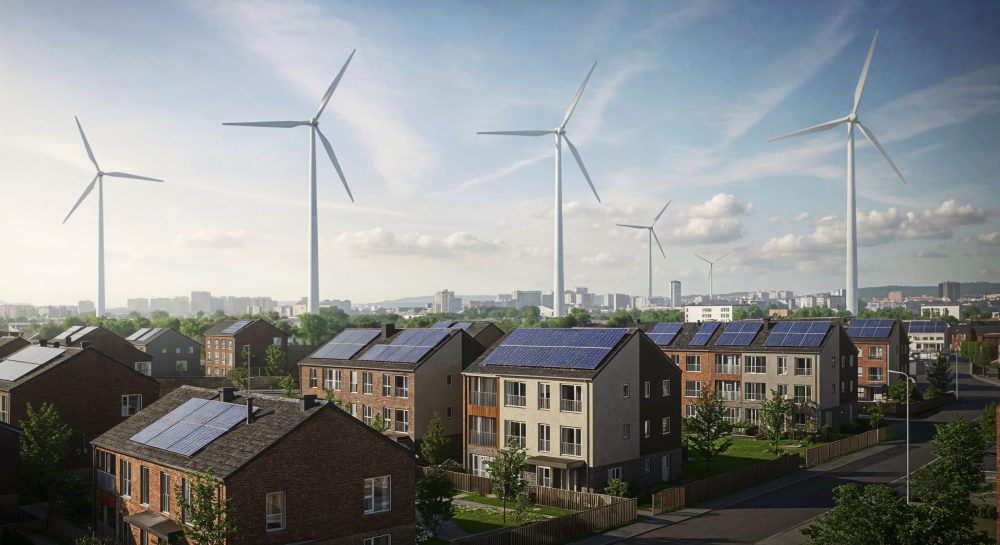
Climate adaptation in construction now demands systemic design changes, resilience, data, and scalable retrofit strategies.
A report by Saint-Gobain and Arup sets out a clear directive for the digital construction sector: building design must evolve to address intensifying climate risks. Adapting Buildings to Climate Change: Perspectives on the Contribution of Building Solutions to the Climate Adaptation Agenda outlines how stakeholders across architecture, engineering, and development must embed resilience into both new-build and retrofit strategies.
The report establishes climate change as a defining constraint on the built environment. It highlights the urgent need for climate-resilient building design, combining digital construction tools, predictive modelling, and material innovation. For professionals working with BIM, digital twins, and simulation platforms, this signals a shift from compliance-led workflows to risk-informed design processes.
Buildings must now respond to both acute climate events, including flooding, storms, and wildfires, and chronic stressors such as rising temperatures. This dual pressure requires integrated solutions that also mitigate the urban heat island effect, particularly in dense urban areas.
Scaling retrofit strategies for existing building stock
One of the report’s most significant insights is the scale of the retrofit challenge. In many regions, up to 90% of buildings expected to exist by 2050 are already constructed. This makes large-scale building retrofit programmes essential to climate adaptation.
Digital construction methodologies, such as scan-to-BIM, asset digitisation, and performance monitoring, enable more efficient upgrade pathways. Retrofitting at scale requires data-driven asset management, ensuring that interventions are prioritised based on risk exposure and lifecycle performance.
Integrated systems and performance-based design
The industry is moving away from isolated products towards integrated building systems designed for multi-hazard environments. The report states: “The market is moving away from isolated products to integrated, performance-oriented systems.”
This aligns with the increasing adoption of performance-based design frameworks, where outcomes such as thermal stability, flood resistance, and structural durability are modelled and validated using digital tools. For construction professionals, this reinforces the importance of interoperability across platforms and disciplines.

Digital tools enabling climate-responsiveaArchitecture
Climate adaptation pathways rely on combining risk analysis, climate data, and adaptive technologies. Digital construction plays a central role through:
- Climate data integration into BIM workflows
- Scenario modelling for future weather patterns
- Parametric design for adaptable building forms
- Digital twins for ongoing performance optimisation
These tools enable designers to simulate future conditions and embed resilience from the earliest stages of the project.
Regulatory evolution and investment in climate adaptation
The report notes that regulatory frameworks are evolving, though gradually, to incorporate climate risk. At the same time, risk transfer mechanisms, such as insurance and resilience financing, are becoming more prominent.
Importantly, the construction market for climate adaptation is expanding. Manufacturers and solution providers are developing products tailored to specific hazards, while also enhancing existing systems. This creates opportunities for investment in low-carbon, climate-resilient construction technologies.
Building envelopes as the first line of defence
A central theme is the role of the building envelope and site design as primary defences against climate impacts. Construction systems must prioritise façades, roofing, insulation, and surrounding landscapes to reduce exposure and improve resilience.
This reinforces the need for holistic design coordination, where architectural intent, engineering performance, and environmental data converge within digital construction ecosystems.
Digital construction must now align design, data, and delivery to climate adaptation goals, ensuring buildings remain functional, resilient, and economically viable under future environmental conditions.
Read next: Building AI-empowered cities – Build in Digital
Are you a building professional? Sign up for a FREE MEMBERSHIP to upload news stories, post job vacancies, and connect with colleagues on our secure social feed.
