
The built environment is a major focus of efforts to mitigate climate change, but dealing with historic buildings offers a particular challenge.
New advice issued by Historic England today aims to address the balance between taking action to improve energy efficiency and decarbonisation, with building adaptation.
The organisation has set out to make it clear that it is both possible to conserve heritage – and address climate change.
The new advice note was issued following a period of public consultation and is intended to provide “clarity and support consistent with decision-making” for proposals to reduce carbon emissions, and improve the energy efficiency of historic buildings – while conserving their significance and ensuring they remain “viable” places to live in the future.

Ian Morrison, director of policy and evidence at Historic England, said: “This advice note demonstrates how the sustainable use and reuse of our historic buildings can help address the impacts of climate change.
“It provides clear advice to local planning authorities, heritage consultants and those involved in the planning process, alongside building owners and occupiers, to ensure England’s historic buildings are adapted appropriately to respond to the climate crisis.”
As historic buildings continue to change and evolve, they need to contribute to a greener future and be fit for purpose for the people who live in, experience, and care for them, Historic England says.
If done “thoughtfully and carefully”, changes to historic buildings can achieve the complementary goals of protecting our heritage and adapting to climate change. Keeping historic buildings in use through sensitive repair, maintenance and adaptation, can help to reduce carbon emissions, reliance on fossil fuels, and energy costs.
The advice note provides:
- Advice on what permissions, such as listed building consent, are needed for some of the common changes required to decarbonise and improve the energy efficiency of historic buildings
- Advice to assist local planning authorities – and other parties involved in the planning process – in determining proposals to decarbonise and improve the energy efficiency of historic buildings to enable positive climate action. Some typical building adaptations in response to climate change impacts are also included
- Signposting to other relevant information, advice, and guidance
Historic England advocates a “whole building approach” when considering adaptations to historic buildings. This is the process of exploring a building’s full context and unique make up to find a range of effective solutions that save energy and carbon, sustain its historic importance, whilst providing a safe and comfortable environment for the people who live there.
The approach considers how these elements might work together to provide the most energy, carbon and cost-effective outcomes.
According to Historic England, the advice note is underpinned by several key principles:
- Understanding a building and how it performs
- Understanding a building’s significance
- Prioritising interventions that are proportionate, effective and sustainable
- Minimising harm and risk of unintended negative consequences
The organisation goes on to explain that some works to listed buildings, in response to climate change, will not affect their special interest, and will not need listed building consent.
Works that would affect the special interest of a listed building (including internal works) will require listed building consent, irrespective of the need for planning permission, it says.
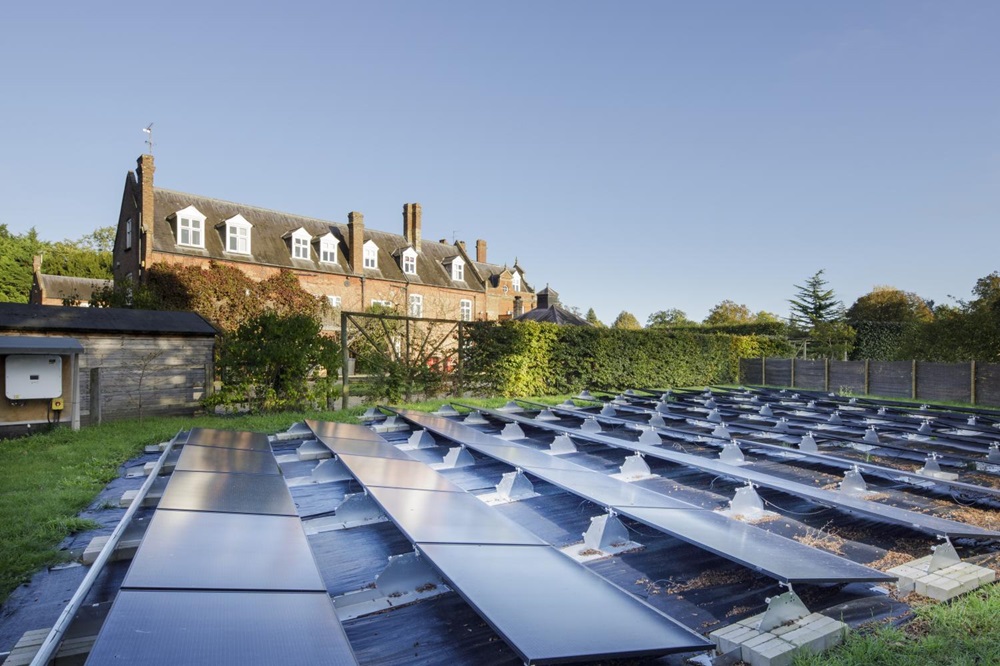
Main image: Chippenham Hall, Chippenham, Cambridgeshire. Exterior general view showing solar panels with beech screen and west wing. View from south. Credit: Historic England Archive
Read next: Retrofit Revisit reveals crucial lessons for future projects
Are you a building professional? Sign up for a FREE MEMBERSHIP to upload news stories, post job vacancies, and connect with colleagues on our secure social feed.
