
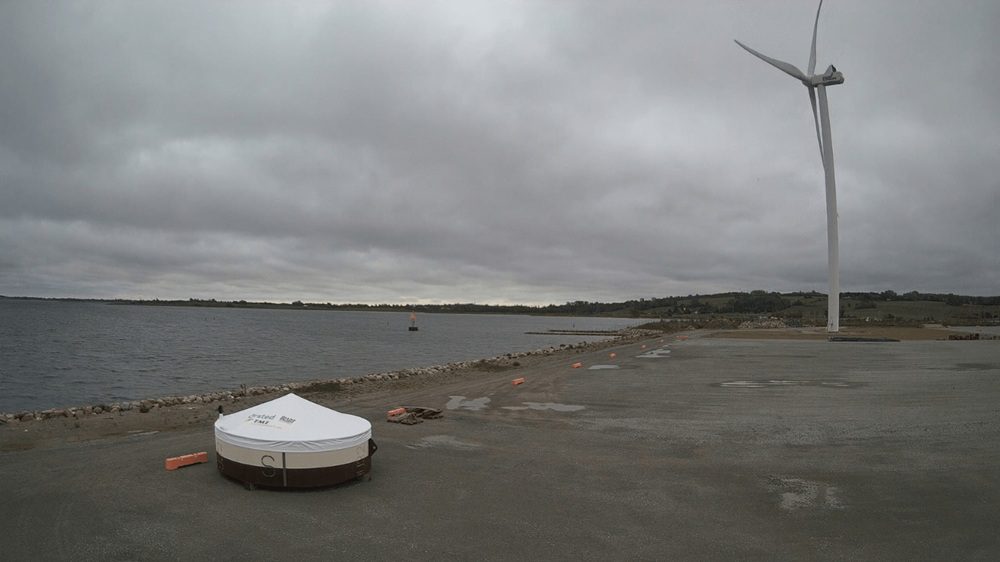
Ørsted is to begin using monopile covers made of a recyclable material in an effort to further enhance the sustainability of its Hornsea 3 offshore wind farm.
The decision follows year-long extensive testing, the company said, conducted in partnership with offshore suppliers TME, and CS WIND Offshore.
The use of the recyclable tarpaulin material has now been approved for monopile covers. This is expected to prevent an average of 10 tonnes of landfill waste per offshore project.
Rasmus Uldahl Kjeldsen, head of construction sustainability at Ørsted, said: “At Ørsted, we believe protecting our environment can go hand in hand with innovation and efficiency. This collaboration with TME and CS WIND Offshore shows that designing out waste from the beginning is possible and can be done without compromising quality or increasing cost.”

Also known as TP-covers, the monopile covers protect the foundation and cables of offshore wind turbines during construction. Ørsted says it has been determined to address the environmental challenge posed by these covers, which need to be of sufficient quality to shield monopiles from the elements.
To solve the problem, Ørsted, first tested every option for industrial recycling of the material that is traditionally used for covers.
As none of the options worked, the company’s partner TME proposed a new recyclable material that has been tested and proved fit for use both by a physical outdoor endurance test at CS WIND Offshore’s facilities and subsequent lab testing.
The material will be used for the first time during the construction of Hornsea 3, the world’s largest offshore wind farm, now rigorous tests have determined it can protect valuable offshore assets. Once construction has finished, they can be recycled, eliminating the use of new material.
Jess Westcott, project director, Hornsea 3, at Ørsted, said: “One of our ambitions on Hornsea 3 is to be the greenest offshore wind farm yet. Using monopile covers that can be recycled is another positive step on that sustainability journey.”
Read next: New sensor ‘sniffs’ out smallest trace of hydrogen
Are you a building professional? Sign up for a FREE MEMBERSHIP to upload news stories, post job vacancies, and connect with colleagues on our secure social feed.
