
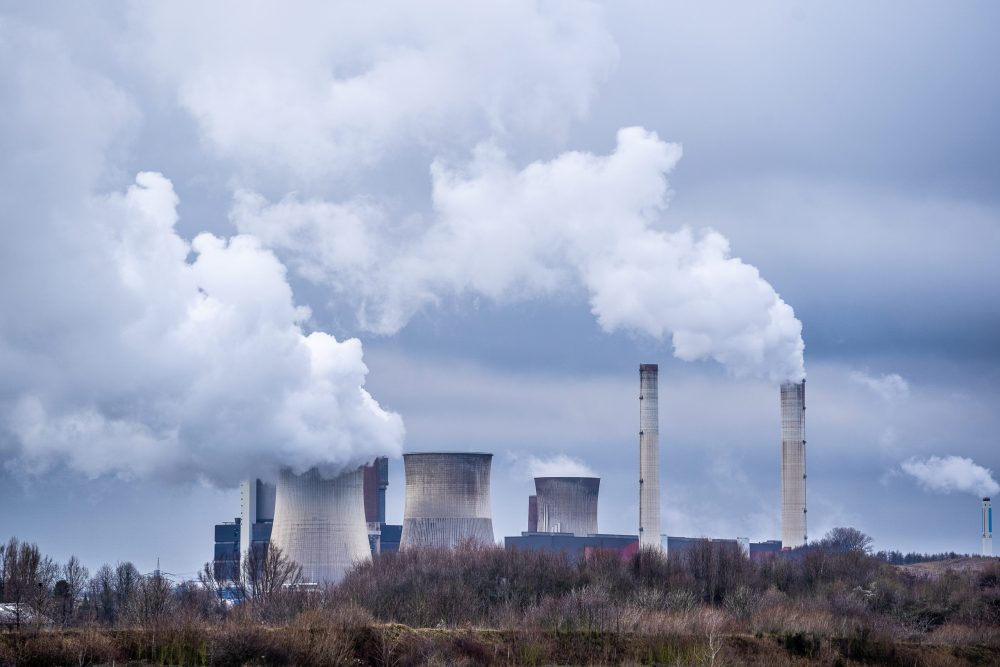
Capturing and reusing industrial waste heat presents a strategic opportunity for UK industry, digital construction and net zero delivery.
Developing systems to capture, store and reuse industrial waste heat could significantly strengthen the UK’s industrial competitiveness, according to a new report from the Royal Society. For the digital construction sector, the findings underline the growing importance of integrating thermal energy strategies into industrial design, infrastructure planning and heat network delivery.
Industrial waste heat and UK emissions
Industrial heating accounts for approximately 14% of total UK greenhouse gas emissions. Despite ongoing efficiency improvements, around half of the energy used in UK industry is lost as waste heat. This loss is largely unavoidable in sectors that rely on extremely high-temperature processes, creating a persistent efficiency and cost challenge for manufacturers.
Industries such as steel, cement, glass and chemicals routinely heat materials to temperatures of up to 2,000°C before cooling them. During this process, substantial amounts of thermal energy are released into the environment. Even as these sectors transition from fossil fuels to cleaner energy sources such as electricity and hydrogen, waste heat will remain a structural issue unless new capture and reuse systems are embedded into industrial infrastructure.
Capturing and reusing industrial waste heat
The Royal Society report, Unlocking thermal energy: Capture, storage and re-use of industrial waste heat, highlights how waste heat recovery could decarbonise industry, reduce overall energy demand and improve productivity. Importantly for the digital construction and built environment sectors, it also identifies industrial waste heat as a potential local heat source for communities.
By recovering this thermal energy, businesses could reduce operational energy costs while supporting national progress towards net zero. At a system level, waste heat reuse could also ease pressure on electricity networks as heating becomes increasingly electrified.

Heat cascades and digital infrastructure planning
Central to the report’s recommendations is the concept of heat cascades. This approach captures high-temperature waste heat at source and reuses it at progressively lower temperatures across multiple applications.
Initially, heat is reused on site within the originating industrial process. Surplus heat can then be shared across local industrial clusters before being supplied to district heat networks serving homes and public buildings. For digital construction professionals, this reinforces the need for integrated energy modelling, digital twins and data-driven planning to coordinate heat flows across assets, sites and regions.
Heat cascades could significantly reduce emissions by cutting the need for additional energy inputs while supporting the development of resilient, local heat infrastructure.
Integrating waste heat into net zero strategies
Professor Andy Woods FRS, Head of the Institute for Energy and Environmental Flows at the University of Cambridge and lead author of the report, emphasised the urgency of early action.
“If the UK is serious about reaching net zero, dealing with the vast amounts of industrial waste heat needs to be integrated into decarbonisation strategies now, and not as an afterthought,” he said. “As industry makes the switch from fossil fuels to cleaner alternatives, we have a huge window of opportunity to integrate systems to capture and reuse industrial waste heat into future infrastructure.”
Failing to integrate waste heat recovery now risks locking in industrial systems that are incompatible with future reuse, potentially undermining long-term competitiveness.
Policy, data and investment requirements
The report calls on government to develop a detailed national picture of where industrial waste heat is generated and where heat demand exists. This data would underpin investment in heat capture, transport and storage technologies, alongside the regulatory and financial frameworks needed to support deployment.
For the digital construction sector, this aligns with the growing role of data platforms, asset information management and cross-sector collaboration in delivering low-carbon infrastructure at scale.
By treating industrial waste heat as a recoverable resource, the UK can strengthen industrial competitiveness, support digital construction innovation, reduce emissions and accelerate delivery of resilient net zero infrastructure.
Read next: Why AI alone won’t fix fragmented building data – Build in Digital
Are you a building professional? Sign up for a FREE MEMBERSHIP to upload news stories, post job vacancies, and connect with colleagues on our secure social feed.
