
A Northumbria University-led project has secured government funding to redesign wind turbine blades using aerodynamic principles borrowed from humpback whales and barn owls.
Project WHOWL – WHale and OWL-inspired synergistic aerodynamic–aeroacoustic control for wind turbine blades – is worth approximately £500,000, with around £400,000 from UK Research and Innovation (UKRI) via the Engineering and Physical Sciences Research Council (EPSRC), and the remainder from Northumbria and the University of Leeds.
It is one of 15 projects selected nationally under EPSRC’s Unlocking the Full Potential of Nature-Based Engineering programme, a £6m initiative applying biological adaptations to engineering problems. WHOWL is the only wind energy project in the cohort and the only one led from the North East of England.
Turbine operators currently face a trade-off between power output and noise: generating more electricity typically means louder blades, forcing operators to slow rotation speeds and adjust blade angle to meet noise regulations, particularly at night. This can sacrifice up to 5% of a site’s clean energy potential, a problem that grows as blades lengthen and tip speeds increase.

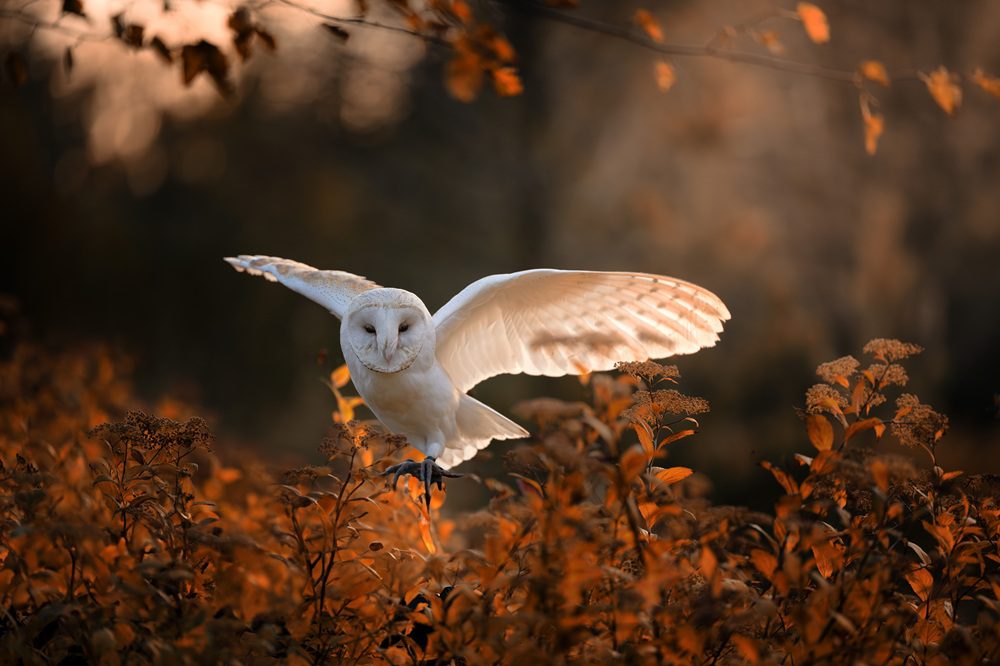
WHOWL will combine two adaptations that have previously only been studied separately: the tubercled, ridged flippers that let humpback whales maintain lift at steep angles, and the fringed trailing-edge feathers that let barn owls fly almost silently.
The 24-month project, beginning in October, will test and model hybrid blade designs using Northumbria’s wind tunnel and its Higgs High-Performance Computing cluster.
The team claims to be targeting a 5% improvement in energy output alongside a 6-10 decibel noise reduction – roughly halving perceived loudness. Applied across the UK’s fleet of around 10,000 turbines, the researchers estimate this could recover around three terawatt-hours of electricity annually, enough to power around a million homes, while avoiding roughly one million tonnes of CO2 from gas-fired backup generation.
Dr Xiang (Shaun) Shen, senior lecturer in aerodynamics at Northumbria and project lead, said: “I’ve been fascinated for years by the idea that the answers to some of our hardest engineering problems are already out there, shaped by millions of years of evolution. If we’re right, it means wind turbines won’t have to choose between generating more power and being quieter, and that could unlock a real amount of clean energy for the UK.”
Dr Graham Askew, project co-lead and an expert in the biomechanics of animal movement at the University of Leeds, added: “By understanding the biological principles that underlie these adaptations, we can translate nature’s designs into technologies that address global challenges such as sustainable energy.”
The project is also supported by ORE Catapult, WhalePower Corporation and West Chester University in the United States, and includes a ring-fenced £75,000 to fund a postdoctoral early-career researcher role, with training at ORE Catapult’s Blyth facility and a research visit to West Chester University.
Main image: Rudolf_Prchlik/ Shutterstock
Read next: Balfour Beatty names legal chief and major projects boss
Are you a building professional? Sign up for a FREE MEMBERSHIP to upload news stories, post job vacancies, and connect with colleagues on our secure social feed.
