
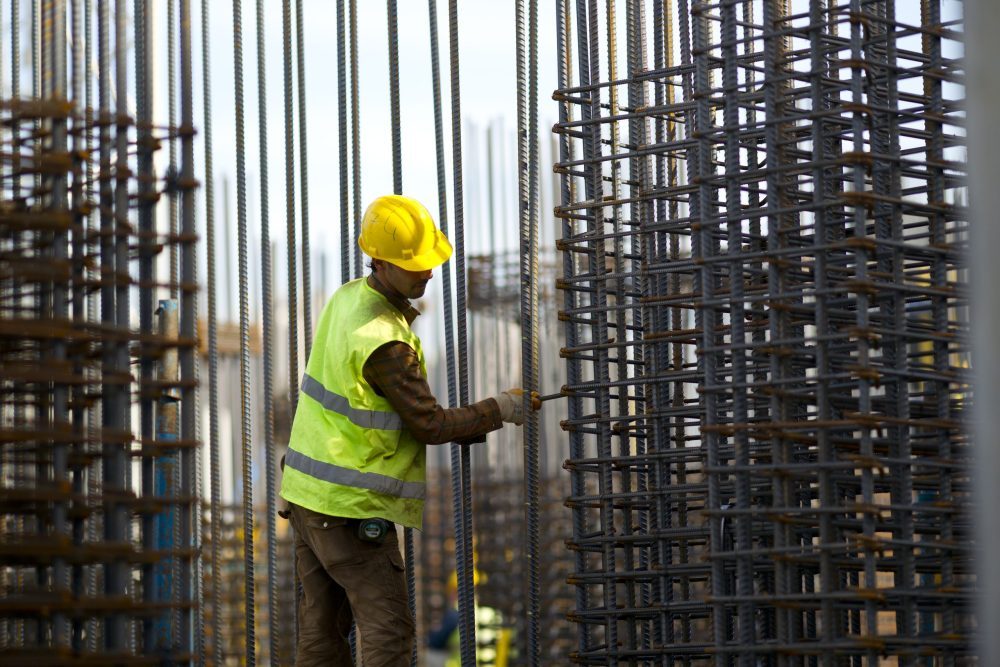
The UK Steel Strategy introduces measures to strengthen domestic production, supporting Welsh steel and construction supply chains.
The UK Government has launched a comprehensive Steel Strategy designed to reinforce domestic steel production and secure long-term resilience across critical sectors, including digital construction, infrastructure delivery, and defence. The policy introduces a coordinated framework combining trade protection, targeted investment, and supply chain reform, with Welsh steelmaking positioned at its centre.
Announced during a visit to Tata Steel operations in Port Talbot, Business and Trade Secretary Peter Kyle outlined a strategic ambition to increase domestic steel production to meet 50% of UK demand, up from the current 30%. This shift is designed to reduce reliance on imported materials and improve supply chain security for major construction and infrastructure programmes.
Kyle stated: “Making steel in the UK is vital for national security, critical infrastructure and the wider economy. Steel-making is a cornerstone of our modern industrial policy that deliberately focuses support for key industries, technologies, and strategically important sectors.”
Trade measures to protect UK steel production
Central to the Steel Strategy is a robust package of trade protections aimed at addressing global overcapacity. From 1 July 2026, steel import quotas will be reduced by 60%, with a 50% tariff applied to imports exceeding these limits. In parallel, the UK will raise its Most Favoured Nation tariffs at the WTO to 50%.
These measures are designed to protect domestic producers such as 7Steel and Tata Steel, ensuring that UK-based manufacturing remains competitive while maintaining necessary import flows for specialist applications.
For the digital construction sector, which depends on predictable material availability and cost stability, these policies provide greater certainty in procurement planning, particularly for large-scale infrastructure and BIM-enabled projects.

Investment in Welsh steel and infrastructure supply chains
The Government has committed an additional £5.8 billion to the National Wealth Fund, positioning it as the primary financing vehicle for strategic industrial investment. Up to £2.5 billion is earmarked specifically for the steel sector during this Parliament.
This builds on over £600 million already allocated to Port Talbot, safeguarding approximately 5,000 skilled jobs and supporting the transition to electric arc furnace (EAF) steelmaking. The transition is being coordinated through initiatives such as the Port Talbot Transition Board, backed by £122 million in joint funding.
Welsh Secretary Jo Stevens emphasised the regional and national importance of the sector: “The UK Government is standing up for Welsh steelmaking and showing that we will do whatever it takes to boost domestic steel production and protect the thousands of steelmaking jobs in our communities.”
She added: “Welsh steel is expected to account for half of future UK steelmaking. It is not only a vital part of the South Wales economy, but also a crucial part of the UK’s industrial strategy, infrastructure capabilities and national security.”
Implications for digital construction and BIM supply chains
The Steel Strategy has direct implications for digital construction workflows, particularly in areas such as Building Information Modelling (BIM), digital twins, and offsite manufacturing. Reliable access to domestically produced steel supports better integration between design models and physical delivery, reducing risk in material scheduling and procurement.
The Government’s target for 50% domestic steel usage aligns with increasing demand for traceability and data transparency within construction supply chains. Proposed measures to track where steel is “melted and poured” will further enhance supply chain visibility, a key requirement for digital construction platforms and compliance frameworks.
In addition, enabling offshore wind developers to include steel manufacturers in Clean Industry Bonus applications strengthens the link between renewable energy infrastructure and domestic material supply, an area of growing importance for net-zero construction strategies.
Transition to low-carbon steel production
A significant component of the strategy is the formal commitment to electric arc furnace (EAF) technology as the future of UK steelmaking. EAF production, which uses recycled scrap metal, supports decarbonisation targets and aligns with sustainability requirements across construction and infrastructure sectors.
The establishment of a cross-government working group to secure scrap metal supply further reinforces this transition, ensuring that EAF facilities can operate at scale. For digital construction stakeholders, this shift supports lifecycle carbon tracking and embodied carbon reduction within project delivery.
Workforce, innovation and productivity measures
The Steel Strategy also addresses workforce and innovation challenges through the Steel Council, which will focus on skills development, research, and productivity improvements. These measures are intended to enhance competitiveness while supporting the integration of advanced manufacturing techniques and digital processes.
For the construction sector, this creates opportunities to align steel production with modern methods of construction (MMC), enabling more efficient fabrication, prefabrication, and assembly processes.
The UK Steel Strategy establishes a framework aligning domestic steel production with digital construction demands, strengthening supply chains, enabling low-carbon delivery, and securing long-term resilience across infrastructure, energy, and built environment sectors.
Are you a building professional? Sign up for a FREE MEMBERSHIP to upload news stories, post job vacancies, and connect with colleagues on our secure social feed.
