
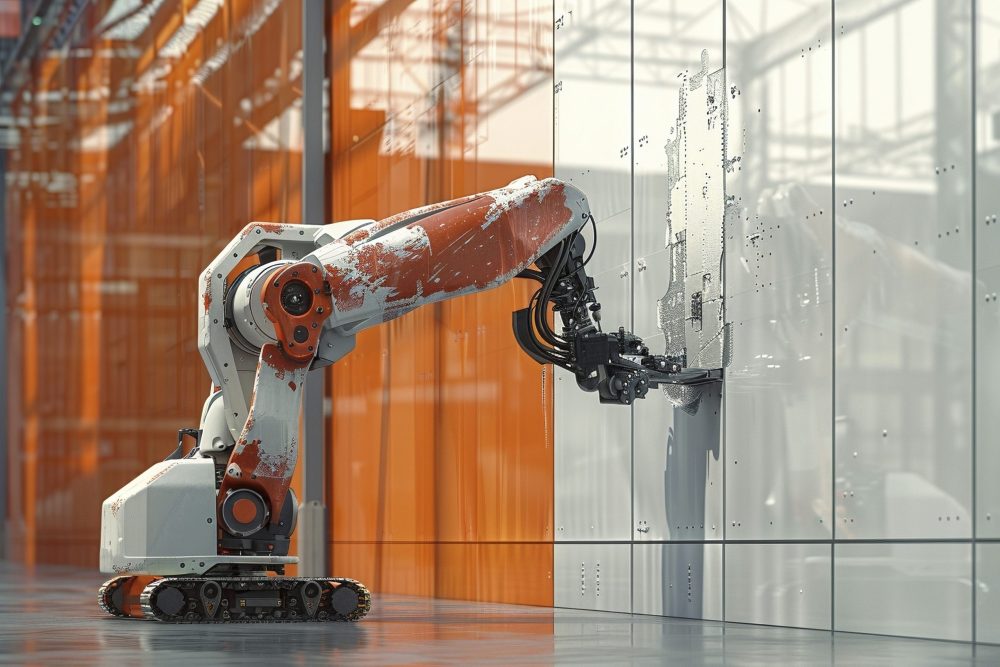
Construction is shifting toward digitally orchestrated delivery, where robotics and AI redefine productivity, safety, and precision.
The digital construction sector is undergoing a structural transformation, moving beyond fragmented workflows toward integrated, model-driven project delivery. Robotics and artificial intelligence (AI) are central to this transition, enabling construction teams to execute with greater accuracy, consistency, and control. When combined with Building Information Modelling (BIM), digital engineering methodologies, and Design for Manufacture and Assembly (DfMA), these technologies are reshaping how projects are planned, delivered, and verified.
Robotics in construction: Automating site execution
Robotics in construction is no longer confined to controlled factory environments. On-site robotic systems are now performing complex, repeatable tasks with measurable gains in productivity and quality. Automated layout robots use BIM models to mark positions with millimetre accuracy, reducing rework and ensuring alignment with design intent.
Rebar-tying robots and robotic welding systems are streamlining labour-intensive processes, addressing skilled labour shortages while maintaining consistent output quality. Similarly, robotic spraying systems for concrete and fireproofing applications are improving material efficiency and reducing manual exposure to hazardous conditions.
These automated build tasks support a broader shift toward industrialised construction, where precision and repeatability are critical. By linking robotic execution directly to digital models, contractors can achieve higher levels of standardisation and reduce variability across projects.
Autonomous plant and equipment: Extending uptime and safety
Autonomous construction equipment is advancing rapidly, with machines capable of operating in assisted or fully autonomous modes. Excavators, bulldozers, and haul trucks equipped with AI-driven control systems can perform earthworks with minimal human intervention, guided by real-time data and geospatial positioning.
This shift toward autonomous plant delivers several operational benefits. Extended machine uptime reduces project delays, while remote operation capabilities enhance site safety by removing personnel from high-risk environments. AI algorithms continuously optimise machine performance, improving fuel efficiency and reducing operational costs.
In large-scale infrastructure projects, autonomous fleets can be coordinated through digital platforms, enabling synchronised operations aligned with project schedules. This level of orchestration supports predictable outcomes and tighter programme control.

Reality capture and AI-driven quality assurance
Reality capture technologies, including drones and ground-based rover units, are playing a critical role in construction quality assurance and progress monitoring. These systems collect high-resolution spatial data, which is then analysed using AI to detect deviations from design models.
Automated defect detection enables early identification of issues, reducing costly rework and supporting compliance with project specifications. Progress verification through continuous scanning provides stakeholders with real-time visibility into site conditions, improving decision-making and reporting accuracy.
Integration with BIM platforms ensures that captured data feeds directly into digital twins, creating a live representation of the asset under construction. This enhances coordination across disciplines and supports data-driven project management.
AI and digital engineering: Enabling predictability and productivity
AI in construction extends beyond physical automation to include predictive analytics, scheduling optimisation, and risk management. Machine learning models analyse historical and real-time data to forecast project outcomes, identify potential delays, and recommend corrective actions.
Digital engineering frameworks integrate these insights into project workflows, enabling more informed planning and execution. When combined with DfMA principles, AI supports offsite manufacturing strategies that further improve efficiency and reduce on-site complexity.
The result is a more predictable construction process, where data informs every stage of delivery, from design coordination to final handover.
Robotics and AI are redefining construction delivery by integrating automation, data, and digital engineering, enabling safer, more predictable, and productive project outcomes across increasingly complex built environment programmes.
Read next: HBC Construction expands digital construction capability – Build in Digital
Are you a building professional? Sign up for a FREE MEMBERSHIP to upload news stories, post job vacancies, and connect with colleagues on our secure social feed.
