
The Engineering Construction Industry Training Board (ECITB) has launched a programme allowing oil and gas technicians to cross-skill into wind turbine maintenance roles, and back again.
The Wind Turbine Maintenance Technician Cross Skill Programme, developed with the Global Wind Organisation (GWO) and Offshore Renewable Energy (ORE) Catapult, follows two successful pilots. It is designed to support worker transferability between oil and gas and wind operations and maintenance.
The six-week course gives existing instrument and controls, mechanical and electrical technicians the technical training needed to work as wind turbine maintenance technicians on onshore or offshore assets.

Andrew Hockey, chief executive of the ECITB, said: “We must ensure industry has the skilled workforce it needs to deploy to existing oil and gas fields while meeting the growing demand for workers to onshore and offshore wind farms.
“This programme enables the two-way transition of qualified oil and gas technicians into wind and then back again as and when maintenance activity is needed.
“It will enable our UK supply chain companies to diversify their energy portfolios and ensure the continuing development of a competent and competitive wind energy supply chain.”
To be eligible, workers must provide proof of ongoing and current technical competence within their primary trade discipline, such as through Connected Competence technical tests. The course content has been mapped to GWO’s elements to reduce duplication and aligns with the learning outcomes of the ITC First Level 3 Award in Safe Working Practice in the Wind Turbine Industry.
The programme is jointly funded by the Department for Energy Security and Net Zero (DESNZ) and the Scottish Government through the Transition Training Fund, which supports workers moving from oil and gas into wind. The Office for Clean Energy Jobs, a unit within DESNZ, cited the programme as an example of a “just transition” within its Clean Energy Jobs Plan.
The Scottish government identified the programme as part of its commitments under the Offshore Wind Priorities and Skills Action Plan. Energy minister Stephen Gethins announced almost £1.7m in investment in offshore wind skills last month, including funding towards the programme.
Chris McDonald, minister for industry, said: “We want to make it as easy as possible for people with skills from oil and gas to take advantage of the growing renewables industry.
“By helping oil and gas technicians move into offshore wind, we’re protecting good jobs, and making sure the UK has the skills to deliver clean power by 2030.”
Industry alignment
Jakob Lau Holst, chief executive of the GWO, said: “We have worked closely with the ECITB on the development of this programme and are delighted to see its official launch.
“The programme achieves alignment with industry standards through GWO’s safety and technical training certification – reducing duplication and training time for technicians.”
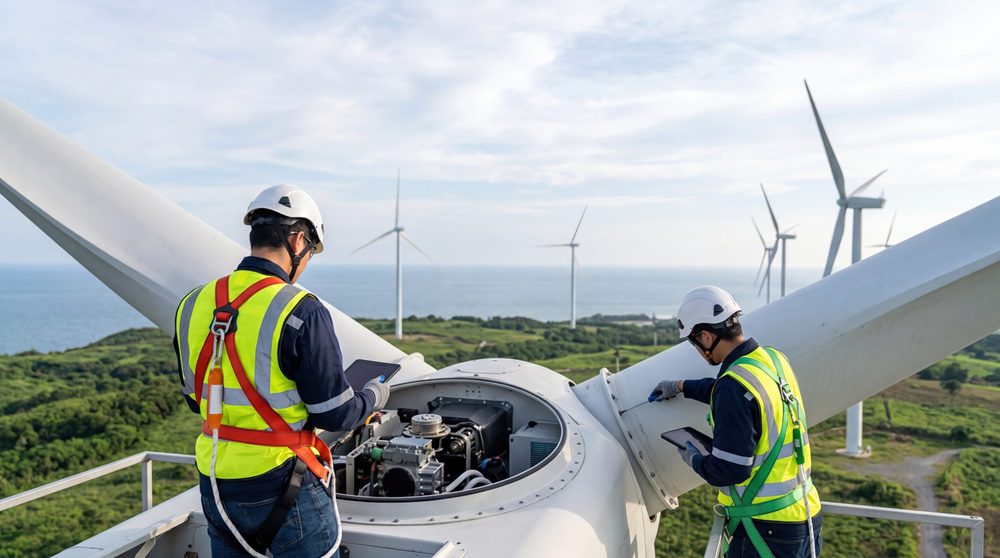
The programme includes site access to ORE Catapult’s Levenmouth demonstration turbine, giving technicians the chance to see the technical content applied inside the nacelle of a wind turbine – a highlight for pilot participant Tiegan Morrison, who said: “We had the class-based theory on the components of the wind turbines but getting to go and see it before we went offshore was great.”
Fellow pilot participant Niall Gibb said the course had given him “a much deeper understanding of the other two disciplines across mechanical and controls and instrumentation,” adding: “It allows time-served technicians to transition efficiently between oil and gas to the renewable industry while maintaining the safety culture that’s been adopted within the oil and gas industry.”
Declan Porter, who also attended the pilot, said: “This programme could be the difference between techs deciding to make the move from oil and gas. It takes the guess work and ‘what ifs’ out of the equation and gives you confidence that you will be qualified and ready to walk into your first wind project.”
Image credit: ECITB
Read next: Satellite AI speeds up global methane leak detection
Are you a building professional? Sign up for a FREE MEMBERSHIP to upload news stories, post job vacancies, and connect with colleagues on our secure social feed.
