
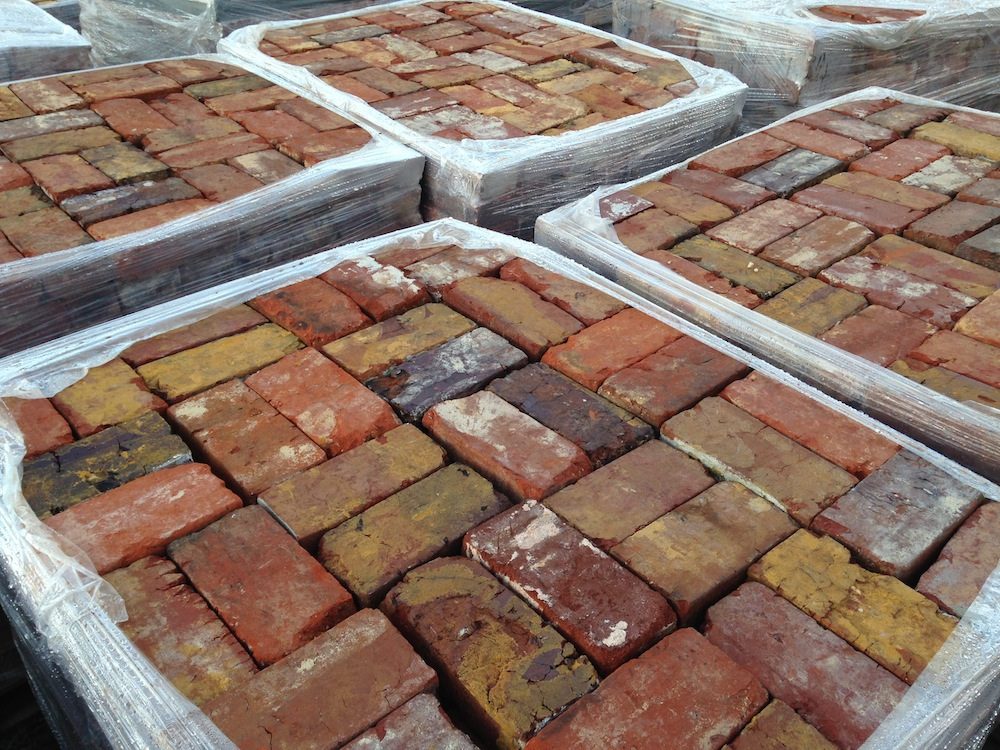
Reclaimed bricks could save almost 6.5 tonnes of embodied carbon per house compared with newly manufactured stock, according to new industry analysis.
The figures come from a life cycle assessment carried out by Tunley Environmental on behalf of Reclaimed Brick Company, comparing the global warming potential of its reclaimed clay bricks against a historic UK brick industry average.
The assessment covers stages A1-A3 of an environmental product declaration – sourcing, transport and manufacturing.

For a typical house using 15,000 bricks, weighing around 30 tonnes, the analysis found reclaimed clay brick production generated -0.10 tCO2e, against 6.39 tCO2e for the historic industry average, a difference of approximately 6.49 tCO2e. The company said this was broadly comparable to the emissions from powering an average home for around 20 years.
New clay bricks require raw materials to be extracted, processed and fired at high temperatures, whereas reclaimed bricks avoid much of that energy-intensive process, having already been through manufacture. Reclaimed Brick Company recovers, cleans, sorts and grades bricks recovered from existing buildings before they are reused, work it says keeps materials in circulation and reduces demand for newly extracted clay.
Luke Clarke, director at Reclaimed Brick Company, said: “Reclaimed bricks have always been valued for their history and character, but this work helps us clearly demonstrate their low-carbon advantage. It gives architects, developers and homeowners verified information they can use when selecting materials for their projects.”
Dr Aaron Yeardley, science team co-lead at Tunley Environmental, said: “The results show the advantage of keeping an existing construction material in use. Reclaimed bricks avoid many of the emissions associated with extracting raw materials and manufacturing new bricks, while supporting a more circular approach to construction.”
The company said the findings were intended to give architects, developers, homebuilders and other specifiers clearer environmental data when comparing materials and assessing embodied carbon on building projects.
Read next: Bouygues UK completes timber-framed academy in Oxfordshire
Are you a building professional? Sign up for a FREE MEMBERSHIP to upload news stories, post job vacancies, and connect with colleagues on our secure social feed.
