
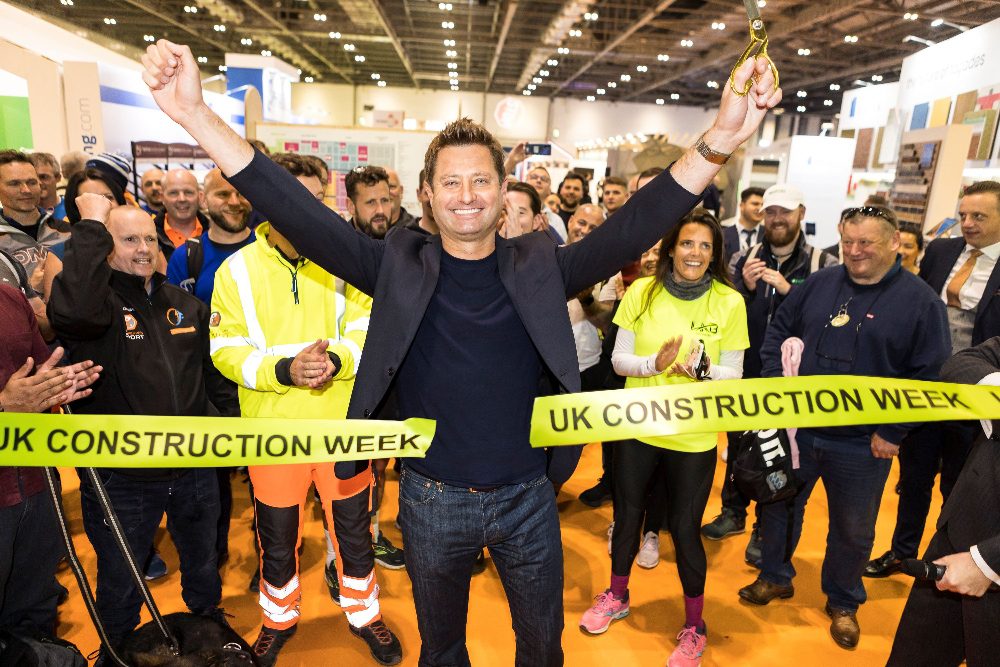
Architect, TV presenter, lecturer, and writer George Clarke has been an ambassador for UK Construction Week (UKCW) since its very first edition in 2015. As the UK’s largest event for the built environment gears up for its 10th anniversary at the NEC Birmingham from 30 September to 2 October 2025, Clarke reflects on a decade of change – and outlines what the next ten years must deliver for the construction sector.
A decade in the making
For Clarke, the defining moment of his ambassadorship came on day one of the very first UK Construction Week.
“The launch of the first event was incredibly special,” he recalls. “It marked the beginning of an exciting journey. I feel honoured to have represented the show for every one of those 10 years.”
In that time, UKCW has grown into a must-attend event for professionals across construction, housing, and infrastructure. It’s hosted industry heavyweights such as government ministers and senior figures like David Hancock, head of the government construction team, whose insights Clarke particularly values.
“Ministers add real credibility to the event,” says Clarke. “We’ve covered everything from infrastructure to skills shortages – issues that need the right people in the room.”
Why UK Construction Week works
According to Clarke, the event’s success rests on a simple but powerful formula: the visitors, the exhibitors, and the sponsors.
“Without those three, there is no event,” he says. “For me, the highlight is always meeting people – the diversity of attendees and the breadth of careers on show are inspiring.”
That human connection is why UKCW has stayed relevant in an increasingly digital world. The 2025 theme, ‘where decisions are made’, underscores the value of face-to-face networking and deal-making.
The big shifts in construction
Reflecting on the past decade, Clarke points to a change of government as the most significant moment for the industry.
“We needed a reset – and we needed to get confidence back. The construction industry always has challenges, but now it’s about ensuring government works with us to deliver long-term progress.”
That progress, he warns, must tackle the construction skills gap, improve housing delivery, and end the cycle of boom-and-bust project pipelines.


Challenges ahead – and how to fix them
Looking to the next 10 years, Clarke identifies four pressing challenges:
- Boosting apprenticeships – half of all construction apprenticeships currently go unfinished. Clarke wants industry and government to unite in making training more attractive, better supported, and more likely to lead to long-term careers.
- Stabilising the market – avoiding feast-and-famine workloads will require consistent public and private investment.
- Government commitment – Clarke calls for a joined-up, long-term construction strategy that survives changes in political leadership.
- A radical Future Homes Standard – to slash carbon emissions and raise build quality.
Housing: reform or regret
With his housing background, Clarke is blunt about the scale of the UK housing crisis and the policy changes needed to fix it.
He wants urgent planning reform, freeing up planners from small-scale applications, and introducing new permitted development rights. He also calls for:
- Higher housing design standards
- Maximising brownfield land
- Reclassifying some low-value green belt land for housing
- A 30-year national housing strategy to build at least 100,000 affordable homes for social rent each year
“We’ve lost huge amounts of council housing over the past 40 years,” he says. “It’s time for a new generation of innovative, net zero carbon new towns.”
Modern methods of construction: promise and reality
UKCW has championed modern methods of construction (MMC) for years, and Clarke remains a supporter. However, he’s realistic about what’s holding the sector back.
“MMC needs massive capital investment and R&D to make real change,” he says. “It can be hugely beneficial in government projects like schools, prisons, and hospitals – but when it comes to mass new-build housing, we still need to improve quality before it becomes the default.”
What excites Clarke about UKCW 2025
This year, Clarke is most looking forward to the housing discussions, including debates on affordable modular housing solutions, planning reform, and solving the housing crisis.
“From the Main Stage talks on delivering affordable, sustainable homes at scale, to the specialist sessions on the Housing Stage – the programme is packed. UKCW has always been ahead of the curve, and this year will be no exception.”
The show will also put a spotlight on AI in construction, mental health in the trades, and tackling the skills shortage – all vital issues for the sector’s future.
The next decade: net zero and beyond
When asked about the future of UK homes, Clarke is unequivocal:
“We must push for a Future Homes Standard that gets us to net zero. Heating is a huge source of emissions, and while construction materials have their own carbon footprint, the lifetime emissions of a home are far greater.”
For him, this isn’t just about sustainability – it’s about creating homes that are affordable, adaptable, and built to last.
UK Construction Week 2025 promises to be more than just an industry showcase – it’s where big ideas meet big decisions. And with voices like George Clarke championing reform, innovation, and collaboration, the event is set to keep shaping the built environment for the next decade and beyond.
“Image: Architect, TV presenter, lecturer, and writer George Clarke”
Read next: Save lives, protect staff – workplace defibrillators – Build in Digital
Are you a building professional? Sign up for a FREE MEMBERSHIP to upload news stories, post job vacancies, and connect with colleagues on our secure social feed.

