
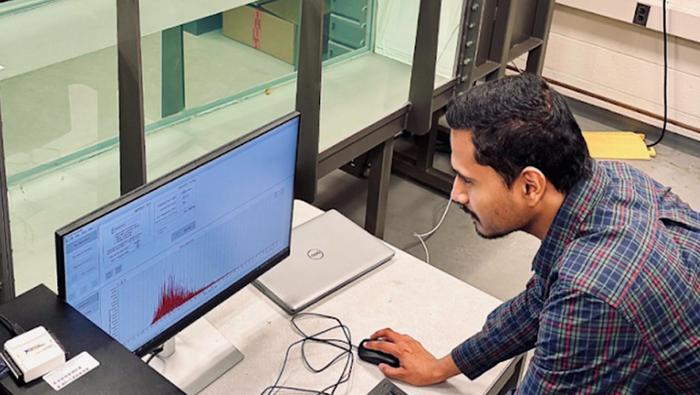
A new internship programme that places digital twin technology and artificial intelligence (AI) at the centre of skills development for the region’s expanding blue economy has been launched by the University of Maine (UMaine). The initiative marks a strategic effort to build a workforce capable of supporting the next generation of digital construction and marine engineering, where virtual modelling, real-time data and AI-driven decision-making are becoming essential.
Digital twin technology
At the heart of the programme is a hands-on approach to digital twin technology for marine infrastructure. Students will work with lab-scale ocean structures fitted with sensors that stream live data into digital dashboards. Using this information, participants will build virtual replicas that mirror the behaviour of physical systems in wind, waves and changing environmental conditions. These digital twins will allow early-career engineers to run tests, adjust parameters and model outcomes in real time, supporting safer and more efficient design processes for marine structures.
Project lead Amrit Verma explains that digital twins are gaining rapid momentum across multiple industries and are emerging as a dedicated career pathway within maritime engineering. As adoption increases, so too does the demand for graduates who understand how data-driven modelling, AI and automation can support the design, testing and optimisation of offshore systems. This internship programme has been designed to meet that need by exposing students to industry-aligned digital construction techniques from the outset of their academic journeys.
Virtual modelling
Over the next three years, the project will support 48 undergraduate and postgraduate students through summer and year-round placements. These internships are structured around the practical application of AI in ocean engineering, real-time data collection, experimental design and virtual modelling. The aim is to support informed decision-making in ocean industries where digital twins can reduce risk, lower costs and improve operational performance.
A key feature of the programme is access to UMaine’s ocean engineering test beds and research facilities. Students will work directly with scaled physical models, including a 1:70 system designed by Verma to support generative AI-based digital twin development. This environment allows students to refine virtual models and test them against real-world conditions, building confidence with real-time data modelling for marine structures and the tools used in advanced marine simulations.
Partnerships with industry and research organisations further strengthen the programme. Participants will collaborate on live projects with employers such as Kelson Marine, Vertical Bay and the National Renewable Energy Laboratory, as well as academic teams across mechanical engineering, electrical and computer engineering, marine sciences and composite structures. These experiences expose students to workflows found in offshore aquaculture, autonomous vessels, advanced materials testing and other sectors central to the region’s economic resilience.
Technical grounding
The technical grounding provided through these internships spans instrumentation, sensor fusion, calibration, manufacturing methods, data acquisition, AI applications and systems optimisation. Students will also gain micro-credentials that formally recognise their skills in digital research and digital twin development. These credentials offer a clear route into roles across digital construction for the blue economy, where employers increasingly seek evidence of practical experience with virtual modelling and AI-enabled engineering processes.
Maine and the wider New England region are identified as critical hubs for the blue economy, with growing demand for skills in offshore energy, marine robotics, climate-resilient coastal infrastructure and digital simulation. By focusing on first- and second-year students as well as early-stage postgraduates, UMaine aims to build a long-term talent pipeline equipped to support the digital transformation of ocean and coastal industries.
The project is delivered by a multidisciplinary academic team and funded through the National Science Foundation’s Experiential Learning in Digital Twin Technologies (ExLENT) programme. Through this initiative, UMaine is positioning itself as a leader in the integration of digital twin technology, AI and ocean engineering education.
Read next: Digital twins in a ‘product-driven’ approach, is key – Build in Digital
Are you a building professional? Sign up for a FREE MEMBERSHIP to upload news stories, post job vacancies, and connect with colleagues on our secure social feed.

