
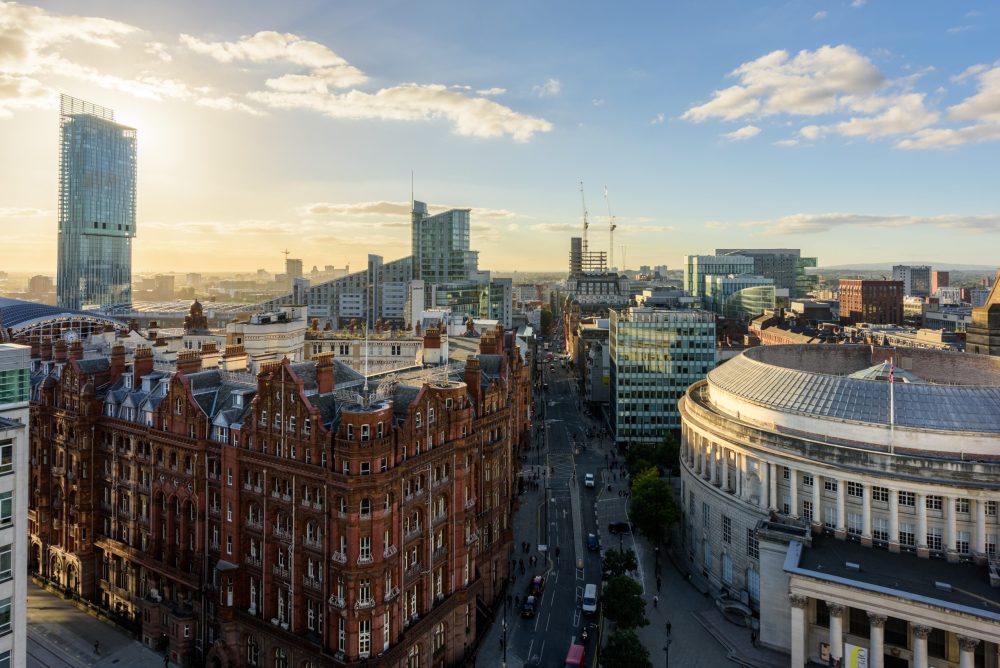
Manchester is preparing to receive significant investment through the new £1bn Greater Manchester Good Growth Fund, a programme designed to accelerate regeneration, infrastructure delivery, commercial development and new housing across the city region. The funding package, due to be approved by Cllr Bev Craig and Greater Manchester Mayor Andy Burnham, marks one of the largest injections of growth capital into the region and reflects a coordinated commitment to long-term economic development.
The first £400m tranche of the fund will support 30 projects across Greater Manchester. For Manchester, the programme will concentrate on expanding the city’s residential pipeline, advancing affordable housing delivery, and unlocking commercial space to meet growing demand. The investment also underpins job creation, skills development and innovation-led growth, supporting key sectors including digital construction, life sciences, advanced manufacturing and low-carbon technologies.
Investment in new housing and regeneration
One of the largest allocations is the £34.1m earmarked for Victoria North, designated earlier this year as one of the Government’s New Towns. The funding will help accelerate the build-out of 622 new homes, including a minimum of 20% genuinely affordable homes. The Victoria North programme is one of the most significant regeneration schemes in the UK and plays a central role in the long-term transformation of north Manchester.
A further £16.3m will support the next phase of the This City programme at Postal Street in the Northern Quarter. This development will deliver 126 new homes with at least 20% set at the Manchester Living Rent. This ensures that the scheme remains accessible to residents on lower and middle incomes while contributing to the city centre’s wider residential growth strategy.
In Wythenshawe, £25.4m has been allocated ahead of the full funding announcement expected in 2026. The wider regeneration programme includes plans for more than 400 new homes, most available at social rent, along with 109 extra-care flats. This investment supports Wythenshawe’s long-term renewal, including the ongoing transformation of the Civic shopping centre.


Commercial and innovation-driven growth
Manchester’s expanding commercial pipeline also receives major backing. The former Kendals department store on Deansgate will undergo a £44m refurbishment, creating 450,000 sq ft of office space. This development responds to sustained demand for high-quality workspace in the city centre and strengthens Manchester’s position as a hub for digital construction firms and technology-led enterprises.
Further investment includes £20m for the expansion of Sister, the global innovation hub. The redevelopment of former University of Manchester buildings will support new office and laboratory space for advanced manufacturing, life sciences, low-carbon technology and digital innovation sectors. An additional £22.1m will deliver 81,000 sq ft of new lab space on Upper Brook Street, adding capacity to the Oxford Road Corridor and strengthening the Knowledge Quarter.
The Mayfield district will receive £13m to progress new office space and a transport hub, while £7m will support the creation of 121,000 sq ft of technology units within the new MIX Manchester innovation district near Manchester Airport. This development is aimed at scale-ups in advanced manufacturing and digital technology, supporting new jobs for local communities.
Driving inclusive growth across Greater Manchester
Cllr Bev Craig emphasised that the fund represents a long-term commitment to economic resilience, housing delivery and inclusive growth. The programme supports the development of new communities, investment in social infrastructure, and the expansion of commercial opportunities that benefit residents across the city region.
The GM Good Growth Fund signals a strategic approach to regeneration, digital construction innovation and sector-led expansion. Its impact will extend across Greater Manchester, strengthening skills, attracting investment and supporting the delivery of homes and workplaces that align with the region’s long-term ambitions.
Read next: BIM 2.0 is here – but most practices are still working like it’s 2015 – Build in Digital
Are you a building professional? Sign up for a FREE MEMBERSHIP to upload news stories, post job vacancies, and connect with colleagues on our secure social feed.
