
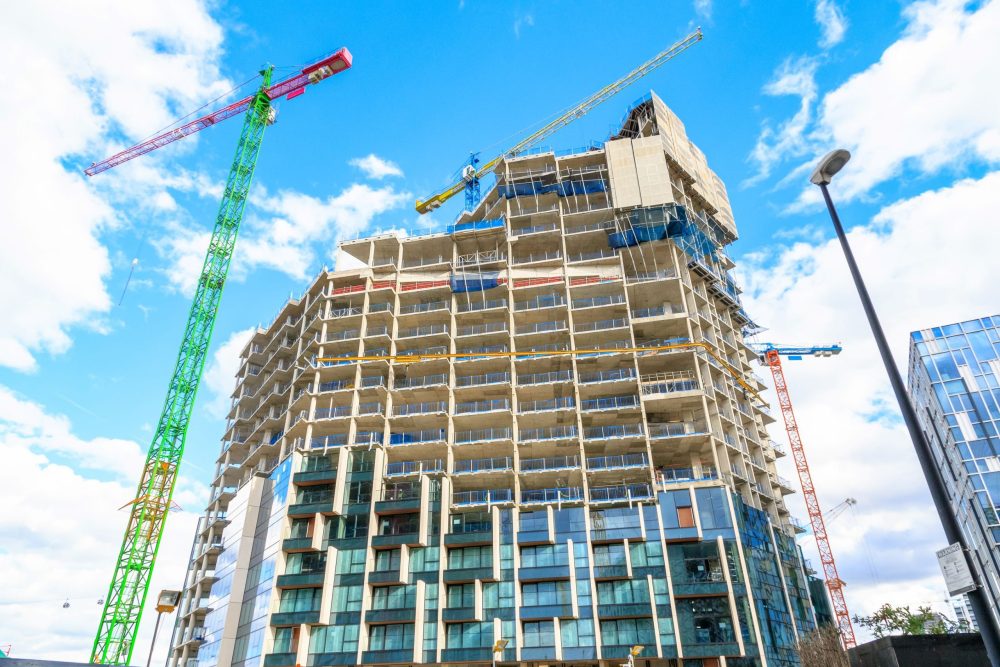
A cross-party House of Lords Committee has raised concerns over delays linked to the Building Safety Regulator (BSR), warning that slow approval processes are holding back essential safety remediation work in high-rise buildings and adding costs for leaseholders. The Committee states that these delays are ‘unacceptable’ and risk preventing the Government from meeting its target of delivering 1.5 million homes by 2029.
The findings appear in a new report, The Building Safety Regulator: Building a better regulator, published by the Industry and Regulators Committee. While the report recognises the value of the BSR’s strengthened oversight of building design, construction and management, it highlights the growing impact of prolonged decision-making on both housing development and remediation of dangerous cladding. For many residents, the pace of progress on building safety reform is leaving unsafe homes unchanged for extended periods, despite well-established risks.
The Committee gathered evidence from campaign groups, developers, housing associations, regulators and industry bodies that work directly with the Building Safety Regulator. Across these groups, several concerns emerged about the operation of the new regulatory system and its influence on the digital construction and wider built environment sectors.
A key theme is the lack of clarity on how duty holders should demonstrate that a building meets safety requirements. Witnesses reported inconsistent guidance on evidencing compliance with Building Regulations, leading to high rates of application rejections. Many of these delays, the report notes, arise from basic errors or incomplete safety documentation, particularly relating to fire safety and structural performance. The Committee argues that this inconsistency reflects both the complexity of the new regime and ongoing competence gaps across parts of the construction industry.


The inquiry also found that a significant number of construction products continue to lack relevant product standards, leaving parts of the supply chain effectively unregulated. Meanwhile, local authority funding pressures have contributed to a workforce of building inspectors that is ageing and unable to meet increasing demand. Skills shortages in both building control and fire inspection remain a barrier to efficient regulatory oversight.
Despite these constraints, the Committee reports that small-scale works, such as bathroom refurbishments in high-rise buildings,are still routed through the BSR’s multidisciplinary teams (MDTs). These teams are already facing heavy workloads, slowing down assessments for larger schemes and complex remediation projects.
The Committee has issued several recommendations. It calls on the BSR to give clearer guidance to its MDTs and to industry on assessing compliance, with an emphasis on consistent interpretation of the Building Regulations. It urges the Government to remove minor works from the BSR approval process or create a streamlined route for them, reducing pressure on specialist teams. The report also proposes allocating the same MDTs to similar projects or buildings from the same organisation to improve familiarity and efficiency. Long-term Government funding for new building and fire inspector training is identified as essential to support the future of the building control system.
Baroness Taylor of Bolton, Chair of the Committee, emphasised that the reforms introduced after the Grenfell Tower fire were necessary to strengthen high-rise building safety. However, she warned that delays now extend far beyond statutory timeframes, increasing frustration among residents and industry. She stressed that slow remediation does not improve safety and that bottlenecks must be addressed to support both existing building improvements and the delivery of new homes.
The report signals that building safety reform must progress at a pace that protects residents while supporting the sector’s contribution to national housing supply. As digital construction, regulatory technology and improved compliance processes become more embedded across the industry, addressing the operational challenges within the BSR will remain a critical priority.
Read next: Strengthen skills in the highways sector – Build in Digital
Are you a building professional? Sign up for a FREE MEMBERSHIP to upload news stories, post job vacancies, and connect with colleagues on our secure social feed.

