
Southampton City Council is demonstrating how digital construction and planning technologies can improve public understanding of complex local plan proposals. Through two pilot programmes, the authority tested interactive consultation platforms and early-stage 3D city modelling to make planning information clearer, more accessible, and easier for residents to engage with online.
Delivered through the planning policy team, with support from communications, GIS, digital and engagement colleagues, and external technology suppliers, the pilots were funded through the PropTech Innovation Fund. The work explored how digital planning consultation tools could support a hybrid engagement approach alongside traditional in-person activity.
Addressing a complex planning challenge
Southampton’s emerging local plan needed to communicate long-term spatial change across issues including housing need, transport and movement, regeneration priorities and climate change. Traditional long-form planning documents were proving difficult for many residents to navigate, limiting meaningful participation.
The council set out to improve how technical planning information was presented, enable residents to explore site-specific development options, and increase participation across different parts of the city. A particular focus was placed on understanding which digital formats residents found most intuitive and engaging.
Pilot 1: testing digital consultation tools
The first pilot tested a fully digital approach using the Bang the Table community engagement platform. Content was structured around five themes: access and movement; environment and climate change; growth and investment; homes; and place shaping.
A mix of digital engagement tools was deployed, including polls, surveys, interactive maps and ideas boards. A short registration process was initially embedded to collect demographic data, while a digital-first communications campaign promoted the consultation through targeted email alerts and social media.
The pilot generated valuable insights. A total of 186 residents participated, contributing almost 800 responses across the platform. Polls and surveys generated the highest levels of engagement, while maps and ideas boards attracted fewer interactions. The access and movement and environment and climate change themes proved most popular.
Demographic analysis showed an over-representation of residents aged 60 to 69 and under-representation of those aged 20 to 29, as well as Black and minority ethnic groups. Registration requirements were identified as a barrier to participation, leading the council to remove them in subsequent engagement.
Pilot 2: integrating early-stage 3D modelling
Building on the first pilot, Southampton refined its digital planning consultation approach for the draft local plan. Bang the Table was used again, with content broken into clearer, theme-based sections to improve navigation.
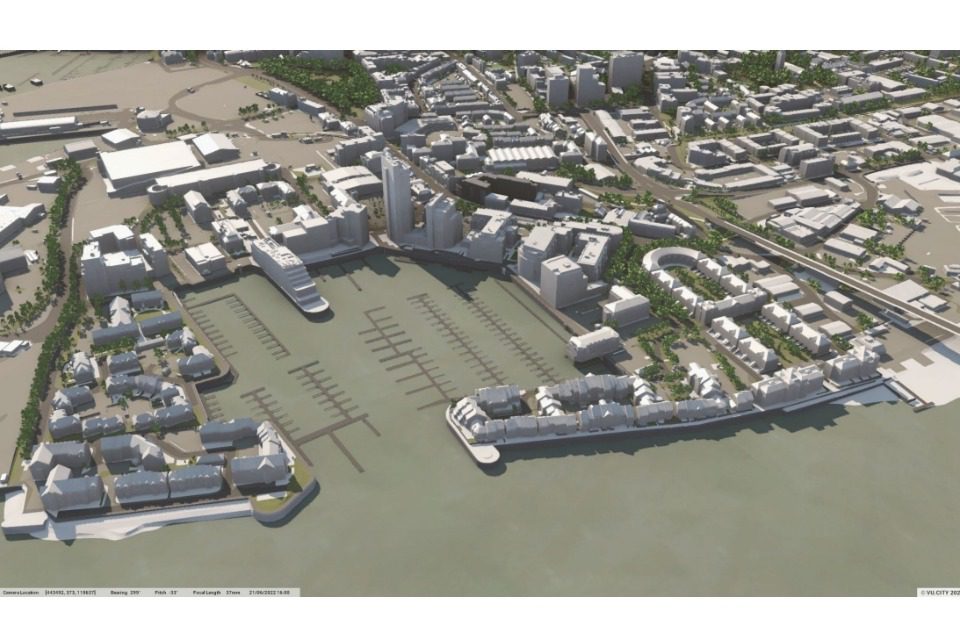
The council also worked with VU.CITY to develop an early-stage 3D city model covering the city centre and district centres. Screenshots from the model were embedded within the consultation to support policy areas such as tall buildings and site allocations, helping residents visualise height, scale and massing.
The engagement strategy expanded to include library drop-in sessions and discussions at existing community meetings, reinforcing a hybrid approach. Questions and site layouts were refined using feedback from the earlier pilot.
Results and impact
Findings from the second pilot showed that theme-based navigation improved accessibility and understanding. The inclusion of 3D model imagery helped illustrate spatial impacts, particularly for proposals involving taller buildings.
However, the council concluded that 3D city modelling is more effective for site-specific masterplanning and development proposals than for high-level local plan policy. In-person engagement remained essential for raising awareness and answering detailed questions, particularly for residents less likely to engage digitally.
Key lessons for digital construction and planning
Southampton identified several lessons relevant to local authorities adopting digital planning tools. Quick, structured engagement methods such as polls and surveys consistently generated higher response rates. Map-based tools and ideas boards required a clear purpose to deliver value.
Collecting demographic data remains important, but overly burdensome registration processes can reduce participation. The pilots also reinforced that digital engagement alone is insufficient for reaching younger audiences, highlighting the need for proactive in-person outreach through schools and youth groups.
Crucially, successful digital planning consultation depends on multidisciplinary collaboration, bringing together planning, communications, consultation and IT expertise.
Next steps for Southampton
Southampton City Council plans to expand its use of digital construction and planning technologies in future consultation stages. Greater use will be made of the 3D city model to support site-specific masterplanning, where visualisation delivers the most value.
The council will also refine its hybrid engagement model, reduce reliance on time-intensive email responses, and strengthen communication planning to improve reach and efficiency.
Southampton’s pilots demonstrate how digital planning consultation, interactive mapping and early-stage 3D modelling can improve transparency, understanding and participation when carefully integrated into a broader engagement strategy.
January weekend closures on the M6 in Cumbria – Build in Digital
Read next: Are you a building professional? Sign up for a FREE MEMBERSHIP to upload news stories, post job vacancies, and connect with colleagues on our secure social feed.

