
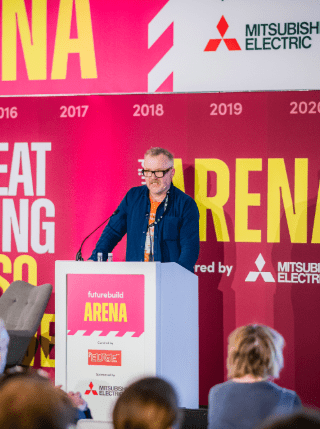
Futurebuild 2026 places resilience, reuse and regenerative design at the core of digital construction transformation.
Futurebuild 2026 has announced a main conference programme centred on resilience, positioning it as a defining priority for the built environment and digital construction sector. Taking place from 12–14 May 2026 at ExCeL London, the event convenes leading organisations including UK Green Building Council, Royal Institute of British Architects, Architects Climate Action Network, Architects Declare and The Sustainable Development Foundation.
This year’s Arena Conference introduces a framework built around the “Three Rs”, resilience, reuse and regenerative design, reflecting the increasing urgency of climate resilience in construction, circular economy in the built environment, and sustainable infrastructure delivery.
Event Director Martin Hurn contextualises the theme: “In education, the ‘Three Rs’ define the fundamentals of learning: reading, (w)riting and (a)rithmetic. As the built environment faces accelerating climate, social and economic pressures, the question becomes more urgent. What are the critical Rs for our future?”
Embedding resilience across digital construction
The Futurebuild Arena Conference 2026 programme directly addresses how digital construction methodologies can support resilient infrastructure, climate adaptation strategies, and long-term asset performance. The focus extends beyond design intent to delivery, integrating digital tools, data-driven decision-making and lifecycle thinking.
Martin Hurn adds: “For Futurebuild, resilience means facing the realities of climate, nature and social change head on. In 2026, we’re doubling down on sustainability and innovation in the arena – and across the entire show – to connect strategy with delivery and ambition with action.”
Key themes include:
- Climate resilience in construction projects
- Circular economy construction strategies
- Digital design for reuse and retrofit
- Regenerative design frameworks and systems thinking
- Community-led sustainable development
These topics align with increasing demand for net zero construction, digital twin adoption, and whole-life carbon assessment across the UK built environment.
Industry leadership and advanced technologies
Mitsubishi Electric joins as the main sponsor of the Arena Conference, highlighting the role of advanced HVAC systems and low-carbon building technologies in achieving resilient outcomes.
Chris Newman, Net Zero Design Manager, emphasises the importance of retrofit strategies: “We know that the majority of current buildings will still be in use in 2050, so we need to find ways to retrofit these buildings to add resilience, by utilising heat pump technologies that already exist and are practical, scalable and grounded in real world performance.”
This reinforces the growing importance of digital retrofit modelling, building performance simulation, and scalable decarbonisation technologies within the digital construction ecosystem.

Circular economy and reuse as core design principles
Day one of the conference explores circular economy in construction as a driver for growth, chaired by David Greenfield, President of Chartered Institution of Wastes Management. Contributions from Yetunde Abdul and representatives from Mace Group, Green Alliance and Green Construction Board will examine policy, innovation and implementation pathways.
A headline session led by Chris Williamson focuses on reuse in architecture as a first principle. Joining him is Duncan Baker-Brown, who states: “Reuse is a design opportunity with profound environmental, social and economic benefits. Futurebuild has consistently created space for these conversations to move from theory into practice and the 2026 Arena programme reflects the urgency and ambition the moment demands.”
This emphasis aligns with digital workflows that enable material passports, asset tracking and reuse optimisation through BIM and data platforms.
Advancing regenerative design and systems thinking
Day two shifts attention to regenerative design in the built environment, addressing both methodology and mindset. Sessions will explore how digital construction tools can enable regenerative outcomes through integrated systems thinking, circular resource flows and net positive environmental impact.
Topics include:
- Regenerative design frameworks in BIM environments
- Nature-positive construction strategies
- Digital tools for lifecycle optimisation
- Systems-based urban planning and placemaking
This reflects a broader industry transition from sustainability to regenerative construction, supported by digital innovation and cross-disciplinary collaboration.
Policy, delivery and the net zero transition
The final day examines the policy and economic context shaping the sector, including the UK Net Zero Carbon Buildings Standard and large-scale sustainable housing delivery. Sessions will also highlight the role of emerging professionals in advancing digital construction practices.
Alongside the main programme, the event features CPD-accredited content across multiple stages covering buildings, materials, energy and placemaking. Co-location with UK Construction Week London and Stone & Surfaces Show expands access to over 700 speakers across 11 stages, reinforcing Futurebuild’s position as a central knowledge hub for construction innovation.
Futurebuild 2026 sets a clear direction for digital construction, aligning resilience, reuse and regenerative design with practical delivery, industry collaboration and policy frameworks shaping a net zero built environment.
Read next: AI and Digital Twin strategy for resilient infrastructure – Build in Digital
Are you a building professional? Sign up for a FREE MEMBERSHIP to upload news stories, post job vacancies, and connect with colleagues on our secure social feed.
