
Winvic Construction advances regional transport infrastructure with Waterbeach haul road project under EHA framework award.
Winvic Construction Ltd has been appointed by Greater Cambridge Partnership to deliver the Waterbeach railway station haul road, marking its first project under the Eastern Highways Alliance Framework (EHF4). This appointment signals continued investment in enabling infrastructure to support long-term housing and transport strategies across Cambridgeshire.
The Eastern Highways Alliance Framework, a £800 million collaborative procurement vehicle managed by Central Bedfordshire Council, brings together ten local authorities to deliver highways and civil engineering projects efficiently. For digital construction professionals, frameworks such as EHF4 demonstrate the increasing role of structured procurement models in driving standardisation, collaboration, and data-led project delivery across regions.
Winvic’s appointment followed a competitive mini competition under Lot 1, reinforcing the importance of supply chain integration and prequalification performance metrics within framework-based procurement. The project is being delivered under an NEC4 Option A contract, supporting cost certainty and transparent risk allocation, key principles aligned with modern digital construction methodologies.
Enabling works supporting Waterbeach new town development
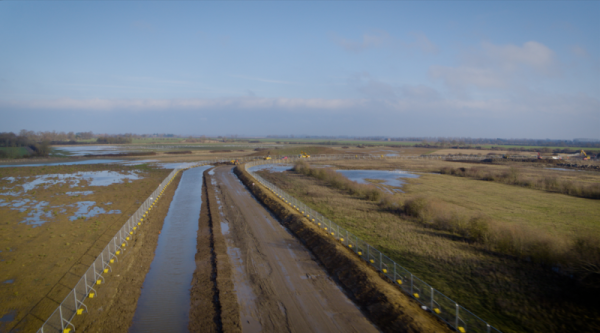
The £3 million haul road scheme commenced in November and is scheduled for completion in Summer 2026. As an enabling works package, the 3.1km route is critical to unlocking the next phase of infrastructure delivery, including the construction of the new railway station by Spencer Group.
Approximately 830 metres of the route will repurpose an existing former airfield taxiway within the Urban & Civic development site, while a further 2.3km of new carriageway will be constructed. This hybrid approach reflects growing adoption of asset reuse strategies within civil engineering, supporting both cost efficiency and carbon reduction targets.
Once complete, the haul road will include a 3.75-metre-wide single carriageway with passing bays across agricultural land, alongside a 7.0-metre-wide section along the taxiway. Drainage systems and fencing will be integrated throughout, demonstrating a coordinated infrastructure design approach aligned with digital modelling and planning workflows.

Earthworks optimisation and carbon reduction
A significant component of the project involves earthworks and utilities protection, with Winvic prioritising the reuse of site-won materials for level adjustments, bund formation, and ditch excavation. This reflects a broader industry shift towards circular construction principles and material optimisation enabled by digital planning tools and site data analysis.
The contractor is also exploring value engineering opportunities to reduce material usage, project costs, and embodied carbon. These strategies align with digital construction trends, where data-driven decision-making enhances sustainability outcomes and lifecycle performance.
Complex site constraints
Effective stakeholder coordination will be central to project delivery. Winvic will work closely with the Greater Cambridge Partnership and Urban & Civic, alongside managing traffic and pedestrian measures on Bannold Drove (Green Lane). Early engagement strategies are designed to minimise disruption, an increasingly important consideration in digitally enabled infrastructure planning.
The site presents additional complexities due to its historic use as a former army barracks. Archaeological monitoring, unexploded ordnance (UXO) risk management, and remote working logistics, up to 3km from the main compound, require robust planning and digital site coordination tools to maintain safety and programme certainty.
Social value delivery through regional collaboration
As part of its EHA commitments, Winvic will deliver a structured social value programme, working with SMEs, educational institutions, and community organisations. Initiatives will focus on employment opportunities, apprenticeships, and support for underrepresented groups, aligned with framework reporting requirements and local priorities.
Rob Cook, Managing Director for Civils and Infrastructure at Winvic, stated: “Securing our first project under the EHA Framework is a significant milestone for Winvic and reflects the strength of our relationship with the Greater Cambridge Partnership, Cambridgeshire County Council and partners across the region. The Waterbeach Station haul road is an important enabling scheme that underpins the long-term growth of the new town and the delivery of critical transport infrastructure.”
Thomas Fitzpatrick, Head of Programme at the Greater Cambridge Partnership, added: “We’re pleased to appoint Winvic to the first phase of work for the new Waterbeach station, building the haul road. The road is designed to minimise disruption to residents during construction of the new station later in the year.”
This project highlights how framework procurement, digital construction methodologies, and regional collaboration are shaping efficient infrastructure delivery, enabling sustainable transport networks while supporting housing growth and long-term economic development.
Read next: Data as infrastructure – Build in Digital
Are you a building professional? Sign up for a FREE MEMBERSHIP to upload news stories, post job vacancies, and connect with colleagues on our secure social feed.
