
Delivering compliant, energy-efficient buildings at speed requires robust digital tools, coordinated teams, and accurate performance modelling processes.
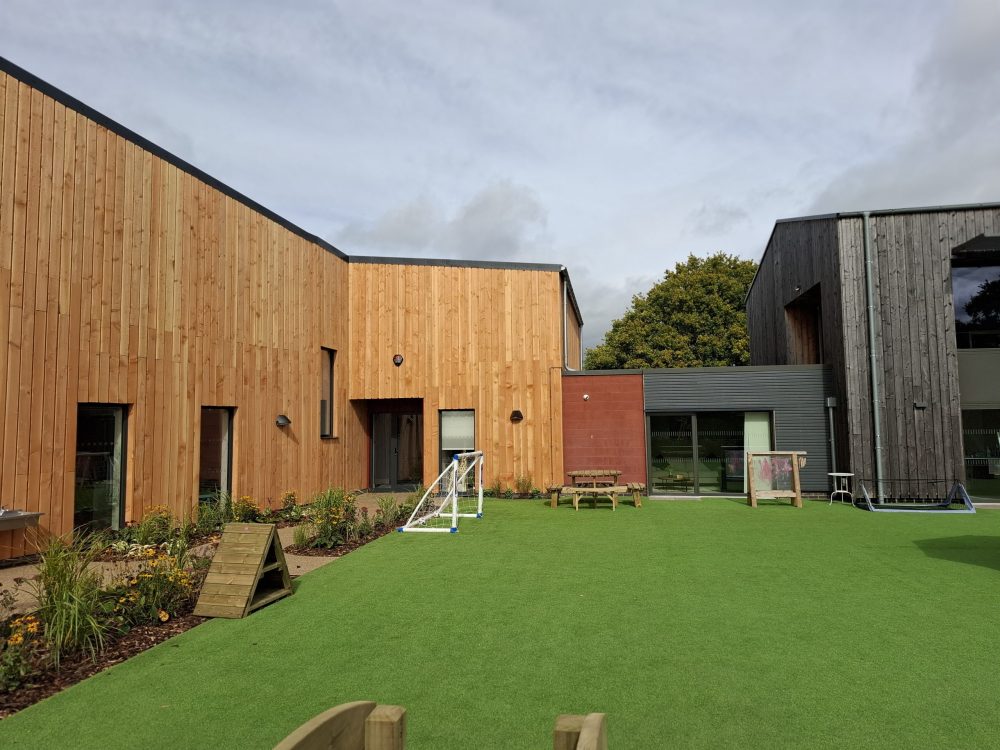
Building performance modelling played a central role in delivering a new two-storey extension for The Joshua Tree, a North West charity supporting families affected by childhood cancer. The project, located in Northwich, was coordinated by BBC Children in Need and DIY SOS, bringing together a multi-disciplinary delivery team under compressed timelines.
MES Building Solutions was responsible for ensuring Part L compliance, aligning the build with the UK government’s net zero targets. The extension includes counselling rooms, gym facilities, therapy and massage spaces, alongside support areas designed to enhance wellbeing and usability.
Building performance modelling for Part L Compliance
The project demonstrates how building performance simulation for UK building regulations can be implemented effectively under time constraints. Simplified Building Energy Model (SBEM) calculations and air-tightness testing were undertaken to verify compliance with Part L, ensuring the building meets energy efficiency standards.
The use of IES Virtual Environment (IESVE) software for compliance modelling enabled rapid iteration and validation of design changes. Model geometry was created using ModelIT, with zoning aligned to room function, while VE Compliance tools defined construction specifications, services, and regulatory inputs.
Geometry imported from SketchUp supported accurate representation of complex roof structures and angular forms. Efficient reassignment of data across zones allowed the team to maintain model integrity as the design evolved at pace.

Managing design changes in fast-track construction
Fast-track delivery required continuous updates to maintain compliance confidence. Digital building modelling workflows for rapid construction projects enabled MES Building Solutions to respond dynamically to design revisions without compromising regulatory accuracy.
Tommy Jackson, sustainable buildings consultant at MES Building Solutions, said: “This was one of the fastest-moving projects I’ve been a part of, delivered by a massive team working under intense time pressure. The challenge was to keep pace with design changes while still maintaining confidence in the compliance position. IESVE was one of the tools used to help us respond quickly, update the model accurately and provide clear compliance feedback, which was important given the timescale.”
Delivering occupant comfort through digital simulation
Beyond compliance, the project prioritised occupant comfort and usability. Building energy modelling for occupant wellbeing ensured that internal environments would support vulnerable users from the outset.
Rich Driffield, CEO at The Joshua Tree, said: “Our families need spaces that feel safe, calm and welcoming all year round. Seeing the building come together so quickly was extraordinary, but what mattered most was knowing it had been properly thought through by the whole project team and would be comfortable from day one. As a charity, we now support families across the UK through a range of on-site and outreach activities. With our main centre fully developed, we have laid strong foundations for the future of The Joshua Tree and, most importantly, are now able to support even more families affected by childhood cancers.”
Collaboration and climate-tech in digital construction
The involvement of Integrated Environmental Solutions highlights the role of climate-tech building performance software in digital construction. The project underscores how collaboration and digital tools enable compliance and performance outcomes even within constrained delivery programmes.
Niall Gibson, Head of EMEA at IES, said: “This project is a great example of what can be achieved through close collaboration. Even under extreme time pressure, building performance and compliance don’t have to be compromised. With the right tools and a collective approach, it’s possible to support rapid delivery while still ensuring buildings perform as intended for the people who rely on them.”
This project demonstrates how digital construction tools, building performance modelling, and collaborative workflows enable rapid delivery while maintaining UK building compliance, energy efficiency, and long-term occupant comfort outcomes.
Are you a building professional? Sign up for a FREE MEMBERSHIP to upload news stories, post job vacancies, and connect with colleagues on our secure social feed.
