
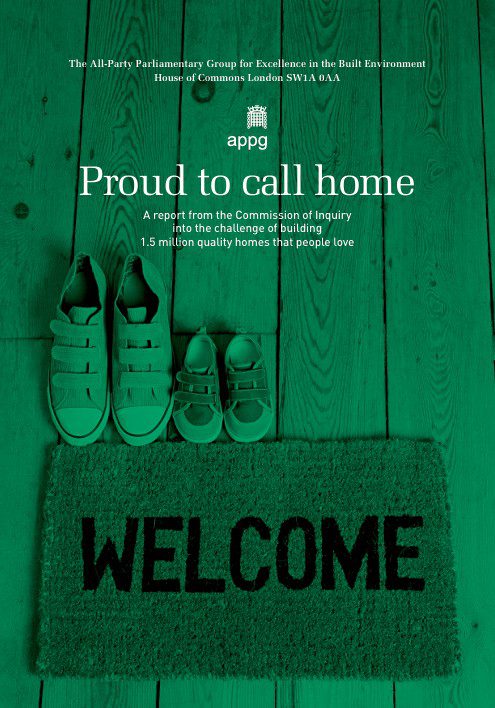
Delivering 1.5 million homes must not compromise quality, design standards, or long-term placemaking outcomes nationwide.
A cross-party group of MPs has raised concerns that the UK Government’s ambition to deliver 1.5 million homes risks undermining build quality, placemaking, and long-term sustainability. The warning comes in the Proud to Call Home report, published by the All-Party Parliamentary Group for Excellence in the Built Environment.
Chaired by Mike Reader MP, the group argues that the current housing strategy presents a “once-in-a-generation opportunity” that could be lost without a stronger focus on quality across planning, design, construction, and post-occupancy performance.
The report aligns with growing concerns across the digital construction sector regarding the integration of quality metrics into high-volume housing delivery programmes.
‘Proud to Call Home’ report calls for higher housebuilding standards
The Proud to Call Home report sets out a framework for improving UK housebuilding quality standards, with a focus on both physical construction and resident experience. While Government guidance, including the Design and Placemaking Planning Practice Guidance, promotes sustainability and wellbeing, MPs note a disconnect between policy and real-world delivery.
The report states: “Local authorities and Government need to consider how to give more weight to design guidance promoting high quality placemaking.”
This highlights a critical issue in digital construction and planning workflows, where data-driven design tools and BIM-enabled processes must better align with policy outcomes to ensure consistent quality.

Key recommendations for improving quality in new housing developments
To address these challenges, the report outlines several actionable recommendations relevant to digital construction, planning systems, and housing delivery frameworks:
- Mandatory design reviews for developments exceeding 250 homes and for strategically significant or historic sites
- Appointment of chief planning officers at cabinet level within local authorities to strengthen design governance
- Improved allocation and monitoring of Section 106 contributions to ensure funding supports agreed infrastructure, including green spaces
- Increased inspection requirements during construction to improve build quality and consumer confidence
- Adoption of a ‘soft landings’ approach with enhanced post-occupancy evaluation to close the energy performance gap
- Mandatory registration of housebuilders with the New Homes Quality Board and New Homes Ombudsman to improve consumer protection
These measures reflect a shift towards data-led quality assurance, lifecycle performance monitoring, and regulatory accountability within the built environment.
Digital construction key to delivering quality at scale
Mike Reader emphasised the importance of embedding quality throughout the housing delivery lifecycle: “The 1.5 million homes this Government has pledged can be a legacy of which future generations are proud. That will only happen if quality is woven through every decision, in policy, planning, design, and delivery.”
He added: “This is a once-in-a-generation opportunity to reshape not just how many homes we build, but how well we build them. We must seize this opportunity and build homes and places people will want to live. Places where people are proud to call home.”
Graham Watts, Chief Executive of the Construction Industry Council, reinforced the report’s practical focus: “This report aims to advance all aspects of housebuilding quality – and to set out practical solutions that will help deliver the homes we need, at the standard the public deserves.”
Digital construction’s role in closing the quality gap
For the UK digital construction sector, the report underscores the importance of integrating BIM, digital twins, and performance analytics into housing delivery. Ensuring compliance with design standards, tracking construction quality, and enabling post-occupancy evaluation are critical to meeting both policy targets and resident expectations.
As housing targets accelerate, the sector faces increasing pressure to balance speed, scale, and quality assurance through digital innovation and improved governance frameworks.
Achieving housing targets requires embedding quality, accountability, and digital innovation across planning, design, construction, and post-occupancy stages to ensure sustainable, high-performing homes and communities for future generations.
Read next: AI and quantum investment strategy – Build in Digital
Are you a building professional? Sign up for a FREE MEMBERSHIP to upload news stories, post job vacancies, and connect with colleagues on our secure social feed.
