
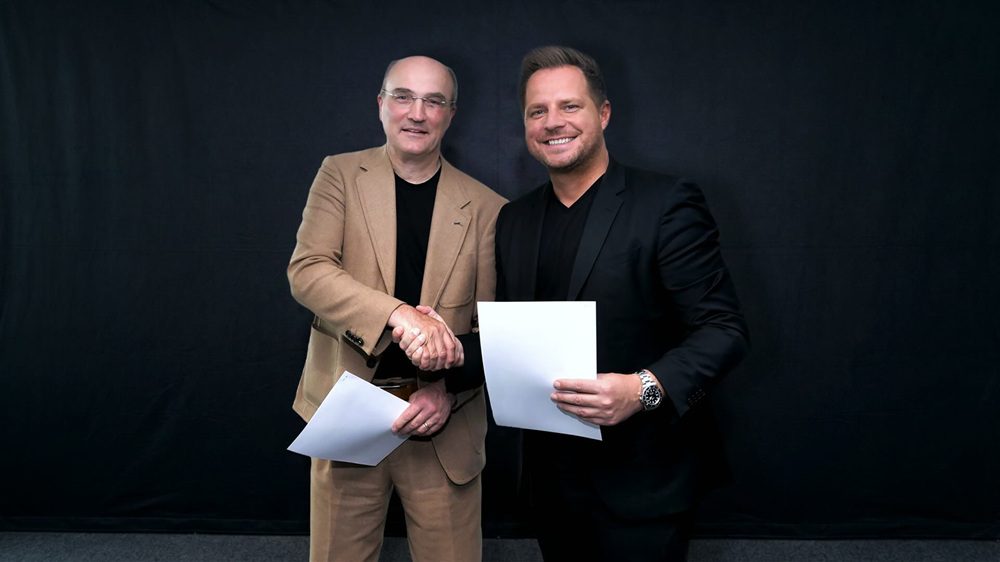
NEURA Robotics has partnered with RWTH Aachen University to build a physical AI training facility, expanding its global network of robot “gyms” to five sites by the end of 2026.
The NEURA Gym RWTH Aachen will be built at the university’s Hightech Campus Melaten and is expected to open by the end of 2026. It forms part of a wider rollout that will see 10 gyms under development globally, with five operational across Europe, the United States and China by year-end.
The facilities are designed to address what NEURA describes as the central obstacle to deploying physical AI: a lack of real-world training data. Unlike large language models, which draw on vast text datasets, robots have access to comparatively little real-world data, and simulation alone cannot replicate the friction and unpredictability of physical environments.
The gyms combine physical training with high-fidelity simulation to generate datasets that feed into the Neuraverse, NEURA’s cloud-based platform connecting robots, developers and industry partners.

The rollout is backed by NEURA’s Series C financing round of up to $1.4bn, which the company describes as the largest ever raised by a full-stack robotics business.
The Aachen site will cover around 3,000 sq. metres, giving manufacturers and mid-sized companies access to infrastructure for validating robotics in production settings, with a particular focus on manufacturing, automotive, the circular economy and medical technology.
Two RWTH chairs will lead the research agenda: professor Volkmar Schulz, chair of imaging and computer vision, working on physics-based foundation models, and professor Burkhard Corves, head of the Institute of Mechanism Theory, Machine Dynamics and Robotics, focusing on safe human-robot interaction.
Aachen is one of two flagship German sites anchoring the European network. The other, the TUM RoboGym, is being developed with the Technical University of Munich and its Munich Institute of Robotics and Machine Intelligence, and is due to open at Munich Airport in the fourth quarter of 2026. That site covers 2,300 sq. metres and is backed by a €17m commitment.
David Reger, founder and chief executive of NEURA Robotics, said: “The biggest bottleneck in physical AI is no longer intelligence, it’s experience. Robots learn by interacting with the real world and that’s exactly why we are building NEURA Gyms.
“Every company possesses expertise that no AI model has today. Our Gyms transform this knowledge into deployable robot skills while every partner remains fully in control of its own data. Together with RWTH Aachen, we are building the infrastructure that physical AI needs to scale.”
Professor Ulrich Rüdiger, rector of RWTH Aachen University, said: “The collaboration with NEURA Robotics and the NEURA Gym RWTH Aachen at the heart of our university takes our transfer strategy to a new level.
“RWTH looks back on decades of technological excellence in mechanical engineering, electrical engineering, and computer science. By combining this scientific leadership with a leading high-tech pioneer, we are creating a unique infrastructure for the skilled professionals of tomorrow and securing Germany’s leading position in the global AI competition.”
Read next: Skills gap could sink cyber resilience bill, report warns
Are you a building professional? Sign up for a FREE MEMBERSHIP to upload news stories, post job vacancies, and connect with colleagues on our secure social feed.
