
New analysis highlights deep structural issues, urging long-term reform to tackle volatility, insolvency and skills shortages in UK construction
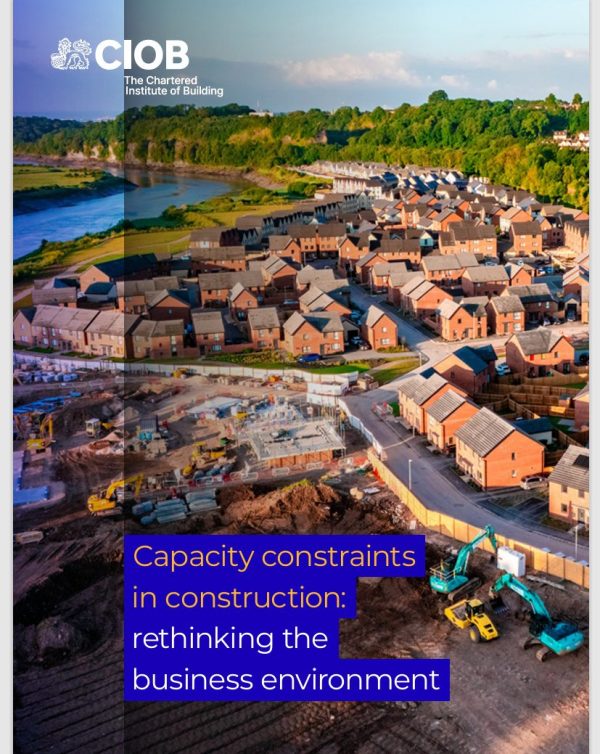
The Chartered Institute of Building (CIOB) has released a significant new economic report examining the UK construction industry’s ability to meet demand for housing and infrastructure delivery. The report, titled Capacity Constraints in Construction: Rethinking the Business Environment, delves into the underlying causes of long-standing challenges in recruitment, retention, and business sustainability, and calls for a fundamental rethink of how the industry operates within its broader economic environment.
Understanding the roots of construction industry volatility
The construction industry has long been recognised as one of the most volatile sectors in the UK economy. Repeated cycles of boom and bust, labour shortages, and high levels of insolvency have created an unstable operating environment for firms of all sizes. CIOB’s report, produced in collaboration with economist Brian Green, seeks to move beyond the traditional narratives of poor productivity or skills shortages, instead highlighting how systemic issues within the business environment itself drive much of this instability.
Green explains: “Construction repeatedly faces capacity challenges. Firms shape themselves to withstand swings between too much work and too little resource, or too little work and too much resource. It is inefficient and debilitating to the industry.”
While many past reports have focused on solutions such as better training, digitalisation, modern methods of construction (MMC) and improved procurement practices, CIOB’s new analysis argues that these often treat symptoms rather than causes. The report suggests that the industry’s apparent inefficiencies are in fact rational responses to a highly volatile business environment, and that meaningful change must start with stabilising that environment.
A call for long-term, systemic reform
CIOB’s findings point to the need for long-term structural reform rather than short-term policy interventions. The report argues that improving construction’s resilience and capacity requires a concerted effort to reduce market volatility, strengthen the institutional framework guiding investment and planning, and enhance the flow of data and information across the sector.
Among its recommendations, the report highlights five key policy objectives for government and industry to focus on:
- Reducing sector volatility through consistent and predictable investment cycles in public infrastructure and housing.
- Strengthening institutional frameworks to improve how decisions on planning, procurement, and project delivery are made.
- Enhancing access to data and intelligence to inform long-term decision-making and monitor sector health.
- Encouraging sustainable business practices that prioritise resilience over short-term competitiveness.
- Creating a stable training and skills pipeline aligned with long-term demand rather than reactive recruitment.
David Barnes, CIOB’s Head of Policy and Public Affairs, said the report is designed to shift the conversation from output targets to structural reform: “The UK Government’s 1.5 million new homes target continues to receive scrutiny, particularly around the construction sector’s capacity to deliver. This report moves the dialogue from aspirational targets to understanding and addressing the deep-rooted structural issues that make the sector volatile and unstable.”


Sector-wide support for a rethink
The CIOB report has received backing from several leading figures across construction and built environment policy.
Professor Noble Francis, Economics Director at the Construction Products Association, praised the report’s focus on root causes: “This research goes beyond the vast array of reports aimed at addressing one symptom of the industry’s problems. It rightly highlights how government can help reduce volatility, enabling firms to invest confidently in skills, capacity, and efficiency.”
Similarly, Lee Bryer, Research Strategy Lead at the Construction Industry Training Board (CITB), emphasised the importance of reframing how policymakers view the industry’s challenges: “Many reviews tell the sector to modernise, digitise or collaborate, but few interrogate the external conditions driving its behaviours. What appears irrational from the outside is often entirely rational within a dysfunctional environment. If policymakers want lasting change, they must focus on reshaping those conditions.”
Building a more resilient construction sector
The CIOB’s Capacity Constraints in Construction report makes clear that for the UK construction industry to meet its obligations, from delivering major infrastructure projects to achieving housing targets and net zero goals, it must operate within a more stable, predictable, and supportive environment.
Reducing volatility, improving access to data, and aligning public policy with the realities of long-term project delivery are essential to strengthening capacity across the sector.
As the industry faces ongoing challenges including rising insolvencies, labour shortages, and inflationary pressures, the CIOB’s call for systemic reform comes at a crucial time. The report serves as both a warning and a roadmap, urging government and industry leaders to rethink the fundamentals of how construction operates, so it can build not just more, but better and more sustainably, for the future.
Read next: Cybersecurity: construction can’t afford to ignore IT – Build in Digital
Are you a building professional? Sign up for a FREE MEMBERSHIP to upload news stories, post job vacancies, and connect with colleagues on our secure social feed.
