
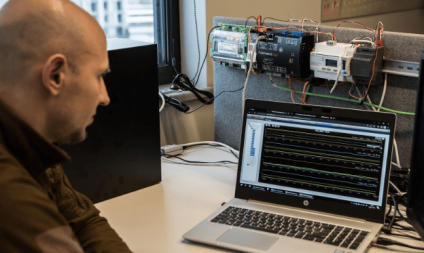
The European Climate Neutrality Observatory (ECNO) has issued a stark warning in its 2025 report: Europe’s buildings remain one of the greatest barriers to achieving net-zero emissions. Despite growing climate commitments, the pace of building renovations, retrofits, and energy efficiency upgrades continues to lag far behind targets.
Between 2018 and 2023, the buildings sector reduced annual CO₂ emissions by an average of just 16.5 million tonnes. To stay aligned with the EU’s climate neutrality pathway, that rate of decarbonisation must more than double by 2030. According to ECNO, stalled building renovations, slow electrification, and rising embodied emissions from construction materials are the key obstacles.
The renovation gap: why Europe is falling behind
Renovations are considered one of the most effective strategies for reducing building emissions. Yet progress has been slow:
- Only 1% of the building stock is renovated each year.
- Deep retrofits, which significantly improve energy performance, reach just 0.2–0.3% annually.
- Demand for carbon-intensive materials such as cement and bricks rose by 18% between 2018 and 2023, increasing embodied emissions.
This shortfall means the EU risks missing its climate neutrality targets unless renovation activity accelerates significantly. Energy experts argue that the current policy framework overlooks faster, more cost-effective solutions, particularly digital retrofits.
Digital retrofits: an overlooked climate solution
Energy efficiency specialists at Exergio, a company developing AI-driven building optimisation solutions, argue that digital retrofits could deliver immediate emission reductions without the disruption of large-scale construction works.
“Deep renovations cover less than 1% of the building stock each year, which I hardly can call progress,” said Donatas Karčiauskas, CEO of Exergio. “Even light measures like replacing windows or swapping boilers have slowed. Despite that, Europe still overlooks digital retrofits. With AI optimisation for buildings, emissions could already be cut by up to 30%.”
Digital retrofits use building automation systems, smart meters, occupancy sensors, and AI analytics to manage heating, cooling, and energy demand in real time. These technologies can:
- Reduce energy consumption during unoccupied periods.
- Shift energy use to cheaper or cleaner times of day.
- Optimise comfort and efficiency across multiple floors or tenants.
- Provide the building performance data policymakers need to track emissions and efficiency.

Electrification and the digital backbone
Electrification of heating and cooling remains a cornerstone of the EU’s climate strategy, but ECNO reports that progress has stalled. The EU’s target is to raise electrification from 21.3% in 2022 to 32% by 2030, yet demand for the enabling technologies is moving in the wrong direction.
Key findings include:
- Heat pump sales declined in 2023–24.
- Annual investment in heat pumps is about €19 billion, far below the €55 billion required.
- Smart meters and optimisation tools, essential to managing electrification, are being deployed too slowly.
According to Karčiauskas, electrification without digital infrastructure is an incomplete solution: “Smart meters and optimisation tools are the backbone that makes electrification work. They track electricity and heat use in short intervals, often every 15 minutes, and show how demand changes across floors or tenants. With that data, AI can warm offices before staff arrive, cool meeting rooms before they fill, or shift usage to cheaper night-time tariffs. Without this system, simply installing more heat pumps will not deliver the expected results.”
Investment shortfalls and policy blind spots
The ECNO report highlights the growing climate investment gap, which reached €344 billion in 2023. This funding deficit is reflected across the energy transition:
- Renovation activity has stalled.
- Heat pump sales are falling.
- Electric vehicle demand is weakening.
- Wind power projects are slowing.
Meanwhile, fossil fuel subsidies remain high, with Europe spending around €400 billion on imported oil and gas in 2024. The consequences are felt directly by households: around 11% of EU families cannot afford adequate heating, cooling, or electricity.
Karčiauskas warns that without redirecting capital towards technologies such as AI-driven energy efficiency, building automation, and smart grid integration, Europe risks locking in high emissions and high costs for years to come.
Towards climate-neutral buildings: the case for digital renovations
The ECNO report makes clear that without urgent action on buildings, the EU cannot meet its net-zero by 2050 commitment. While deep renovations and new low-carbon technologies are essential, digital retrofits offer a scalable and immediate pathway to:
- Cut building emissions by up to 30%.
- Enable smarter electrification of heating and cooling.
- Provide real-time building energy performance data.
- Reduce household energy bills and improve comfort.
“Digital retrofits should be treated as part of the transition toolkit,” concluded Karčiauskas. “They cut emissions immediately, enable electrification, and provide the performance data policymakers still lack.”
Read next: Real-time urban water tech platform – Build in Digital
Are you a building professional? Sign up for a FREE MEMBERSHIP to upload news stories, post job vacancies, and connect with colleagues on our secure social feed.
