
NBS and Circular Ecology have launched guidance to standardise embodied carbon calculations within BIM objects.
NBS has partnered with Circular Ecology to publish a technical resource for the construction sector. The NBS Guide: ‘Embodied Carbon Calculations – How to apply carbon values to BIM objects’ provides practical instruction for integrating carbon data directly into digital design workflows.
The guide addresses one of the construction sector’s persistent challenges: fragmented and inconsistent embodied carbon data. Without reliable data embedded in digital design tools, architects, engineers and specifiers face limitations when attempting to assess environmental impact during the design phase.
Developed by sustainability specialists and digital construction experts, the guidance establishes a structured framework for applying embodied carbon values to building information modelling (BIM) objects. It focuses specifically on upfront embodied carbon emissions across Modules A1–A5 defined in BS EN 15804, which cover product manufacturing, transport and construction processes.

Practical methodology for embodied carbon calculations in BIM objects
The guidance was authored by Dr Craig Jones, Managing Director at Circular Ecology, Joe Rouse, Senior Sustainability Consultant at Circular Ecology and Dr Lee Jones, Head of Sustainability at Hubexo. It outlines a geometry-led approach that enables embodied carbon data to be calculated and assigned at the BIM object level.
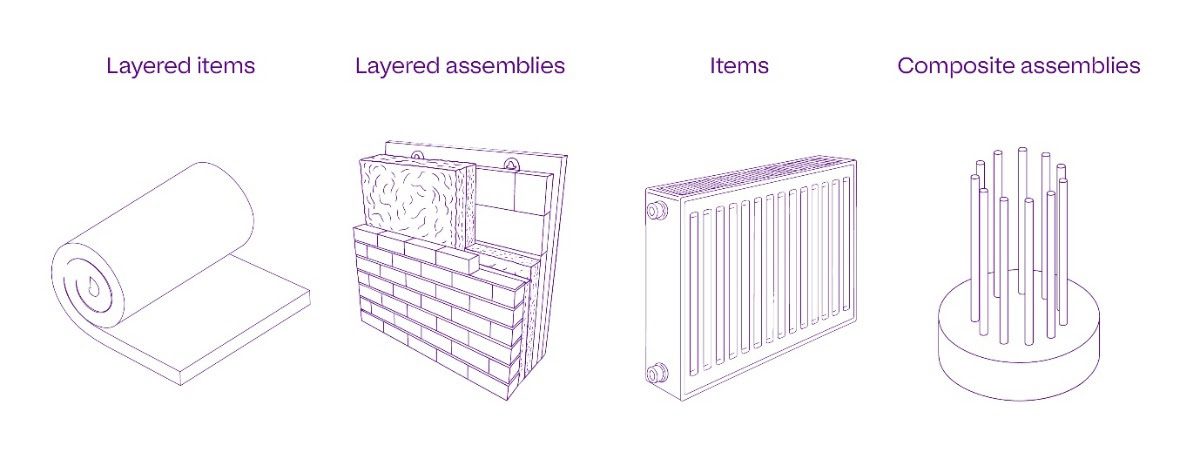
The framework identifies four primary BIM object categories used across digital construction environments:
- Layered Items – single materials or systems such as insulation or brickwork
- Layered Assemblies – assemblies built from layered materials, including cavity walls
- Items – standalone multi-material objects such as washbasins or radiators
- Composite Assemblies – non-layered multi-material elements including reinforced concrete
For each category, the guide explains how to calculate embodied carbon by multiplying material quantities by relevant emission factors, while accounting for factors such as material density and object geometry. This structured method translates complex sustainability standards into information that can be embedded directly into BIM object data.
Standardising carbon data within digital construction workflows
Embedding consistent carbon metrics within BIM objects enables design teams to evaluate environmental impact during early design stages. Standardised data also supports comparisons between materials, components and construction methods.
According to Dr Lee Jones, the guidance bridges the gap between sustainability theory and practical BIM implementation.
“Every design decision made without embodied carbon data is a missed opportunity to reduce our industry’s environmental impact. This guide gives designers the tools to make informed carbon choices from day one. We’ve translated complex standards into practical methodology that works within existing BIM workflows. The result? Transparent, consistent carbon data that enables comparisons and supports the construction sector’s transition to net zero.”
By standardising embodied carbon calculations within BIM objects, the NBS and Circular Ecology guide supports data-driven design decisions and enables construction professionals to integrate carbon reduction strategies directly into digital construction workflows.
Read next: Manchester Property Awards launch at MIPIM – Build in Digital
Are you a building professional? Sign up for a FREE MEMBERSHIP to upload news stories, post job vacancies, and connect with colleagues on our secure social feed.
