
A structural monitoring system combining fibre-optic sensing and automated data analysis is helping safeguard construction of Sweden’s Västlänken rail project in Gothenburg.
Hottinger Brüel & Kjær (HBK) has deployed the technology at Korsvägen Station, part of an eight-kilometre underground rail connection beneath the city that includes more than six kilometres of tunnels and three new underground stations.
HBK is working with the Swedish Transport Administration, Trafikverket, and engineering consultancy COWI to provide real-time structural insight at the site, described as one of the project’s most technically demanding.
Excavation at Korsvägen has required careful management of load transfer between highly stressed bedrock and newly installed reinforced concrete support structures, while maintaining safety and minimising disruption to the surrounding urban environment.

The integrated monitoring system combines fibre-optic sensing, multi-parameter instrumentation and automated data acquisition, continuously measuring structural behaviour during excavation. It converts data into information intended to help engineers understand load transfer, verify structural performance and identify deviations at an early stage.
COWI designed the automated engineering analysis in collaboration with HBK. The system accounts for temperature effects, shrinkage and creep, allowing project teams to focus on the structural responses considered most significant during critical excavation activities.
Dorin Lungu, site manager for concrete works on the Trafikverket project, said: “We highly value the ability to monitor concrete columns with high-strength concrete class, using strain sensors, temperature sensors, and humidity sensors. The sensors are used to monitor the concrete columns during the construction phase and mainly after, with an expected active lifespan of 120 years. Throughout this process, HBK’s team provided fast technical support, visiting sites and conducting inspections as needed.”
Mats Rydén, business development manager at HBK, said: “Major infrastructure projects require confidence in every decision made underground. At Korsvägen, we’re helping project teams move beyond data collection to engineering intelligence, providing the right product needed to manage risk, maintain progress and verify structural performance in one of Sweden’s most complex urban construction environments.”
The instrumentation installed during construction is designed to remain in place once the station becomes operational, supporting long-term structural health monitoring for asset owners beyond project completion.
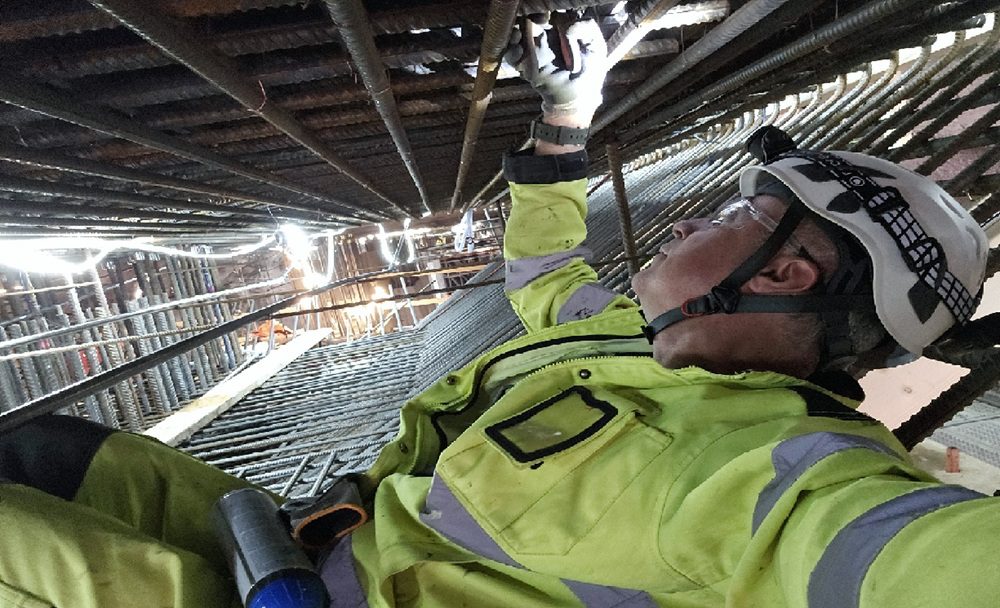
Main image: HBK installing monitoring sensors at the Korsvägen Station
Read next: Why net zero isn’t enough
Are you a building professional? Sign up for a FREE MEMBERSHIP to upload news stories, post job vacancies, and connect with colleagues on our secure social feed.
