
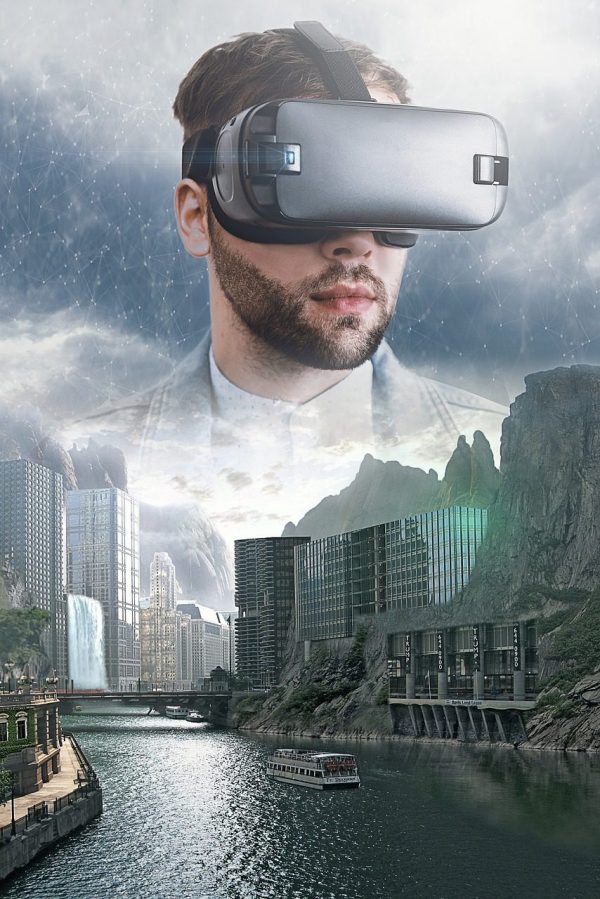
The digital construction sector is rapidly evolving, driven by the adoption of advanced technologies that were once confined to entertainment. Gaming technology, in particular, has emerged as a powerful tool for enhancing design, collaboration, and project delivery. From immersive virtual reality (VR) walkthroughs to real-time rendering and gamified training, innovations from the gaming industry are reshaping how architects, engineers, and contractors plan, visualise, and execute construction projects.
Why gaming technology matters
Gaming technology brings three essential capabilities to the construction sector:
- Real-time rendering – allowing stakeholders to experience designs instantly, rather than waiting for static visualisations.
- Immersive environments – delivering virtual and augmented reality experiences that improve collaboration and communication.
- Interactivity and simulation – enabling gamified training, risk modelling, and scenario testing.
These features make gaming technology an invaluable tool for improving efficiency, accuracy, and decision-making throughout the construction lifecycle.
Key applications of gaming technology in digital construction
1. Visualisation and design collaboration
Architects and designers are increasingly using game engines such as Unreal Engine and Unity to create highly detailed 3D models. Unlike traditional CAD tools, these platforms allow for:
- Interactive walkthroughs of buildings and infrastructure projects.
- Photorealistic rendering that showcases lighting, materials, and finishes in real time.
- Collaborative environments where multiple stakeholders can explore and comment on designs simultaneously.
This approach improves communication between design teams, clients, and contractors, reducing the risk of costly design changes later in the project.
2. Virtual Reality (VR) and Augmented Reality (AR)
Immersive technologies derived from gaming are revolutionising how projects are experienced:
- Virtual Reality (VR): Stakeholders can enter a virtual model of a building before it is constructed, identifying design flaws, accessibility issues, or spatial constraints.
- Augmented Reality (AR): Contractors and site teams can overlay digital models onto physical environments, improving accuracy during installation and reducing errors on site.
These tools not only improve decision-making but also enhance client engagement by allowing non-technical stakeholders to better understand design intent.

3. Digital twin development
Gaming technology underpins many digital twin platforms, which provide real-time, interactive representations of built assets. Using game engines, digital twins can:
- Integrate live data feeds from sensors, IoT devices, and BIM models.
- Enable scenario testing for energy efficiency, occupancy, and maintenance planning.
- Support facility management by providing an intuitive, interactive interface for asset operators.
This level of interactivity makes digital twins more usable, accessible, and valuable throughout the lifecycle of a building or infrastructure asset.
4. Gamified training and safety simulations
One of the most promising applications of gaming in construction is training. Simulation-based learning allows construction professionals to:
- Practise health and safety scenarios in a controlled, risk-free environment.
- Learn complex machinery operation through realistic, gamified simulations.
- Improve workforce skills without disrupting live projects or incurring additional costs.
Research shows that interactive, gamified training leads to higher engagement and knowledge retention compared to traditional training methods.
5. Project planning and risk management
Game-based simulation tools allow construction teams to:
- Test “what if” scenarios such as delays, material shortages, or weather events.
- Optimise logistics and site sequencing by visualising construction processes in a virtual environment.
- Reduce risks by identifying bottlenecks or safety hazards before work begins.
By bringing together predictive analytics and gaming simulation, the industry can achieve more resilient and cost-effective project delivery.
Benefits of gaming technology
The integration of gaming technology provides measurable advantages for construction stakeholders:
- Improved collaboration between multidisciplinary teams.
- Reduced design errors and fewer costly project changes.
- Enhanced stakeholder engagement through immersive experiences.
- Faster decision-making enabled by real-time visualisation.
- Better workforce training through gamified and interactive learning.
The future of gaming technology
As digital construction continues to evolve, gaming technology is expected to play an even greater role. The convergence of AI, VR, AR, and digital twin technology will create increasingly intelligent and immersive platforms for project delivery. We can expect to see:
- Greater adoption of metaverse-style platforms for collaborative project meetings.
- AI-driven generative design integrated with real-time rendering.
- Wider use of cloud-based simulation tools for global project collaboration.
Gaming technology is driving innovation across the digital construction sector enabling construction professionals to visualise projects more effectively, manage risks with greater accuracy, and deliver better outcomes for clients and end-users.
Read next: The UK’s ‘Goldilocks Moment for AI’ – Build in Digital
Are you a building professional? Sign up for a FREE MEMBERSHIP to upload news stories, post job vacancies, and connect with colleagues on our secure social feed.
