
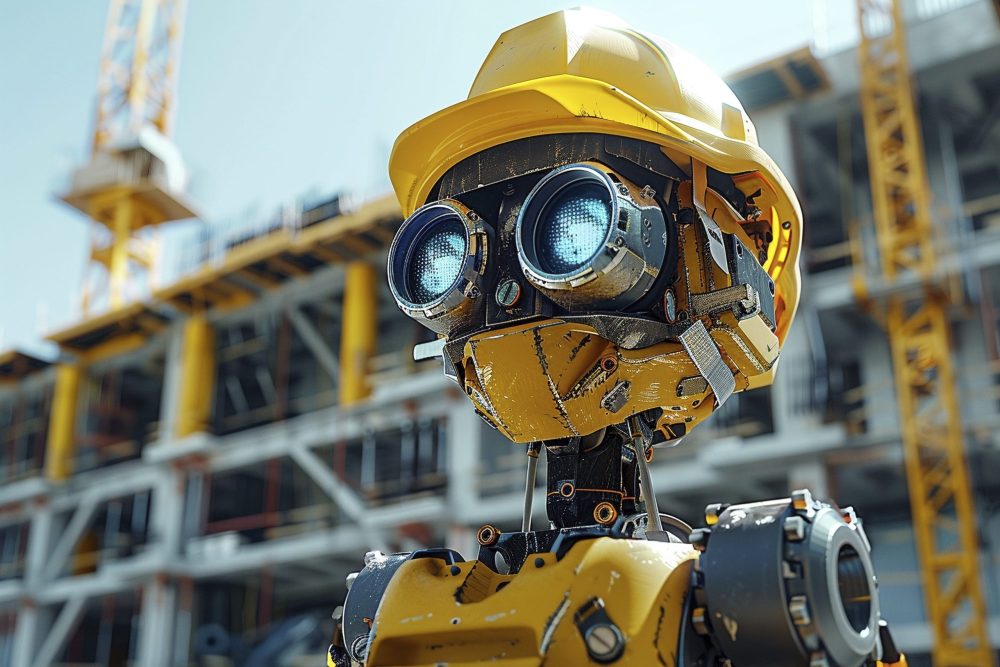
The global market for physical AI systems is entering a rapid growth phase, driven by advances in technologies that enable machines to interact ‘intelligently’ with the real world, claims analysis by Counterpoint Research.
Technologies include robotics, edge computing, generative AI, along with vision systems and sensors are fuelling this trend. According to Counterpoint’s Global Physical AI Market Tracker report, device shipments including vehicles, robots and drones will reach 145m units in the decade from 2025 to 2035.
Soumen Mandal, principal analyst, said: “Physical AI represents the next major evolution of AI. While the first AI wave focused on digital intelligence – software that understands text, images and data, the next wave brings AI into the physical world, allowing machines to perceive their surroundings and interact autonomously.”
Counterpoint’s Physical AI research covers multiple types of autonomous systems embodying spatial sensor-backed AI blended with a digital world. This includes self-driving vehicles, robots, drones and eventually newer form factors such as cameras.

Within robotics, Counterpoint suggests the service, industrial and humanoid segments will make up the bulk of the autonomous systems with embodied AI.
Service robots will account for the largest shipment volumes in the robotics segment, driven by expanding use cases across logistics, warehouses, hospitality, healthcare, cleaning, security and agriculture.
Industrial robots, which currently have more limited deployment, largely concentrated in automotive, electronics and heavy machinery industries, where high system costs and complexity restrict volumes, will see wider adoption driven by broader applications, improving scale, lower costs, and easier deployment models.
While still in the early stages of development, humanoid robots are gaining momentum as companies develop machines capable of performing complex human-like tasks across factories, warehouses and service environments.
Neil Shah, Counterpoint’s research vice president, said: “Humanoid robots represent one of the most exciting long-term opportunities within Physical AI. Advances in generative AI, computer vision systems and motion control are bringing us closer to general-purpose robots that can operate in human environments.
“While there are advancements in the ‘form’, the ‘mind’ is something that is ripe for innovation. The industry has to cross the chasm from AMI (Autonomous Machine Intelligence) to embodied AGI (Artificial General Intelligence).”
Shah added: “We are closely monitoring the components, whether semiconductors, sensing or software, going into these robots. The rise of Vision-Language Models and Vision-Action Models unifies multimodal perception, language understanding and reasoning, and executable control within a single sequence modelling framework, which will be a critical inflection point. Although commercialisation will take time, the long-term impact will be transformational across multiple industries”.
Autonomous vehicles (L4 and above) are expected to see slower volumes initially, but the expansion of robotaxis and autonomous personal vehicles could significantly scale adoption over time, making this segment the largest revenue contributor from the OEM perspective.
Commercial drones (excluding consumer and defence drones) are also expected to see strong cumulative shipment growth due to their relatively lower ASPs and increasingly clear regulatory frameworks in major markets.
Peter Richardson, research vice president, said: “Autonomous vehicles are the foundational layer for the current Physical AI transition, and there are lots of similarities between today’s humanoid robot development and autonomous vehicles. However, autonomous vehicles will remain the most value-driven segment fuelled by advanced autonomy, computing, AI capabilities and real-time connectivity.”
Technological demands
Richardson added: “Drones are emerging as the earliest large-scale deployment of Physical AI, with rapid adoption across logistics, surveillance and enterprise use cases driving high-volume growth.”
As Physical AI systems gain more features and deeper real-world integration, mechanical component costs are likely to decline over time due to scale and maturity, the firm says. However, the growing need for advanced computing capabilities will drive higher demand for compute and semiconductors, increasing their share of the overall system cost.
The approach to this market varies across compute players, Counterpoint says. NVIDIA is targeting the Physical AI market with a data centre-to-edge strategy, leveraging its strengths in AI training, simulation, and high-performance compute platforms for robotics and autonomous machines. Qualcomm, meanwhile, is pursuing an ecosystem-first, power-efficient edge AI approach, focusing on integrated AI compute and connectivity platforms for robots, drones and other autonomous systems operating at the edge.
Marc Einstein, Counterpoint’s research director, said: “Physical AI will create opportunities across the broader ecosystem. Beyond device makers, compute players will benefit by powering the ‘brains’ of these systems. Telecom operators will gain from increased data traffic, connectivity and edge services. Meanwhile, software and services providers will see recurring revenue opportunities through data analytics, lifecycle management, fleet services and cloud infrastructure.”
Read next: Costain hits gas pipeline milestone for Cadent
Are you a building professional? Sign up for a FREE MEMBERSHIP to upload news stories, post job vacancies, and connect with colleagues on our secure social feed.
