
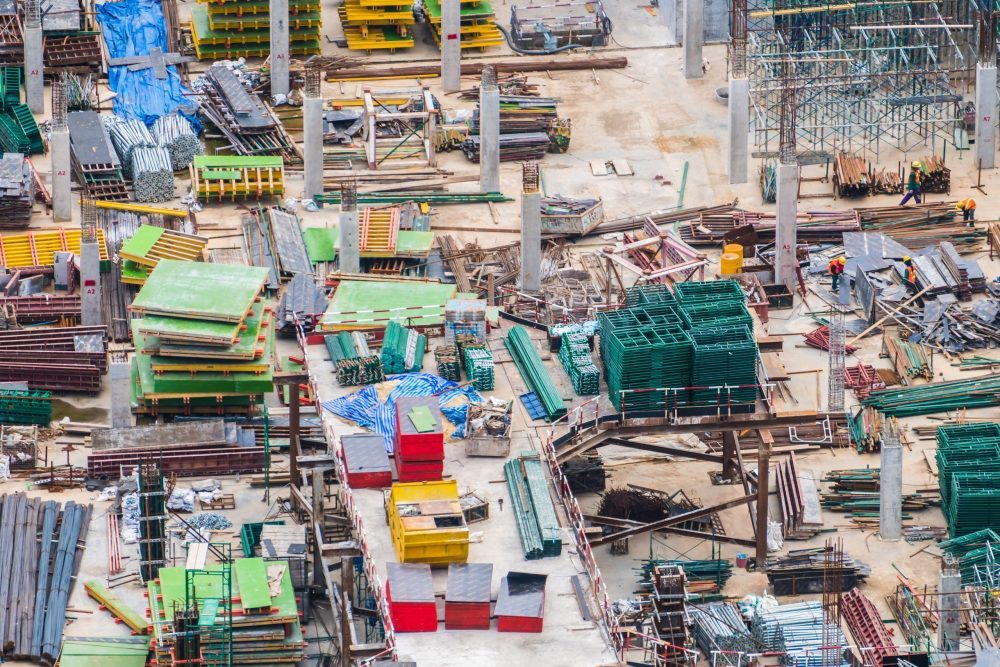
The UK construction material supply chain faces sustained pressure from costs, demand fluctuations, and global disruption.
Recent data highlights ongoing fragility across the UK construction sector. Total output fell by 2.0% in the three months to January 2026, extending four months of contraction. While infrastructure projects, energy-efficiency programmes, and selected commercial developments recorded modest growth, this activity has not compensated for continued weakness in new-build housing and residential repair, maintenance, and improvement (RMI).
This imbalance reflects a broader slowdown in private housing delivery, a critical driver of construction material demand. As a result, overall demand across the construction material supply chain remains subdued despite pockets of resilience.
Material availability and domestic production constraints
In terms of product availability, the short-term outlook remains relatively stable across most categories. However, concrete plain roof tiles continue to present a notable exception. Domestic manufacturers are experiencing sustained production constraints, with shortages expected to persist throughout 2026.
Efforts to improve output, such as extended production runs of single-colour tiles, are underway, but these measures have yet to fully resolve supply limitations. This issue underscores the vulnerability of specific product lines within an otherwise stable supply environment.
Global disruption and import pressures
Geopolitical developments are exerting increasing influence on construction material supply. The ongoing Middle East conflict is not directly disrupting the majority of UK-sourced materials, as most products are manufactured domestically or within Europe. However, indirect impacts are becoming more pronounced.
Imports of wall and floor tiles, alongside exterior porcelain and sandstone from India, have been affected by production halts linked to gas shortages. Although alternative products from UK and European suppliers are available, these substitutes are typically associated with higher costs.
Shipping disruption is also contributing to volatility. Rerouting of freight from the Far East around the Cape has led to sharp increases in container costs, with reported price rises ranging from 20% to over 100%. These changes are not only inflating costs but also extending delivery timelines, adding complexity to project planning.

Rising energy and fuel costs are driving price inflation
The most significant risk facing the construction material supply chain is the rapid escalation of energy and fuel costs. Manufacturers reliant on energy-intensive processes or oil-based raw materials are experiencing immediate cost pressures.
At the logistics level, suppliers and distributors, who are among the largest users of UK road and rail networks, are seeing direct impacts from rising fuel prices. Petrol and diesel costs have increased by approximately 10% and 20% respectively in late March 2026, with limited signs of stabilisation.
This has prompted industry calls for the government to delay the removal of the fuel duty discount to mitigate further cost escalation. However, even with potential policy intervention, energy price volatility remains a critical concern across the supply chain.
Supply chain collaboration
Despite these pressures, many manufacturers are taking a structured approach to cost management. Clear communication, advance notice of price increases, and transparent justification for surcharges are helping to maintain stability across supplier relationships.
However, concerns persist among merchants, contractors, and housebuilders regarding the speed and unpredictability of some cost increases—particularly in transport. Limited notice and insufficient supporting data for surcharges are creating challenges for budgeting and contract management.
In parallel, the mechanical engineering segment is experiencing additional strain from rising commodity prices. Copper costs were already increasing prior to the current geopolitical tensions, while steel prices are now fluctuating rapidly. This volatility is making it difficult for firms to secure reliable quotes, with availability and pricing identified as key risks.
Industry challenges
Reflecting on the current environment, co-chairs of the Construction Leadership Council’s Material Supply Chain Group emphasise the scale of uncertainty facing the sector.
John Newcomb, CEO of the Builders Merchants Federation, and Peter Caplehorn, CEO of the Construction Products Association, state: “Demand remains low, short-term availability remains stable, but the main risk comes from rising energy and fuel costs that are driving up prices.”
They also highlight the importance of industry-wide coordination, noting that clear communication and early sharing of forecasts are essential to managing disruption effectively.
Financial pressures and SME vulnerability
As increased costs move through the supply chain, margins are tightening across all tiers. This creates particular risk for SMEs, which often operate with limited financial resilience.
The cumulative impact of material cost inflation, transport volatility, and uncertain demand is placing strain on supply chain stability. Monitoring financial health across the sector is becoming a priority, particularly as insolvency risks rise under sustained pressure.
Sustained collaboration, transparent pricing, and proactive planning will be essential to stabilise supply chains, protect margins, and maintain delivery confidence across the UK construction sector.
Read next: Advancing robotics and AI innovation – Build in Digital
Are you a building professional? Sign up for a FREE MEMBERSHIP to upload news stories, post job vacancies, and connect with colleagues on our secure social feed.
